
Editorial Research Index
Institutional briefings & primary regulatory analysis
Financial analysis and briefings published by Sovereign Tax Atlas.
20 matching briefings
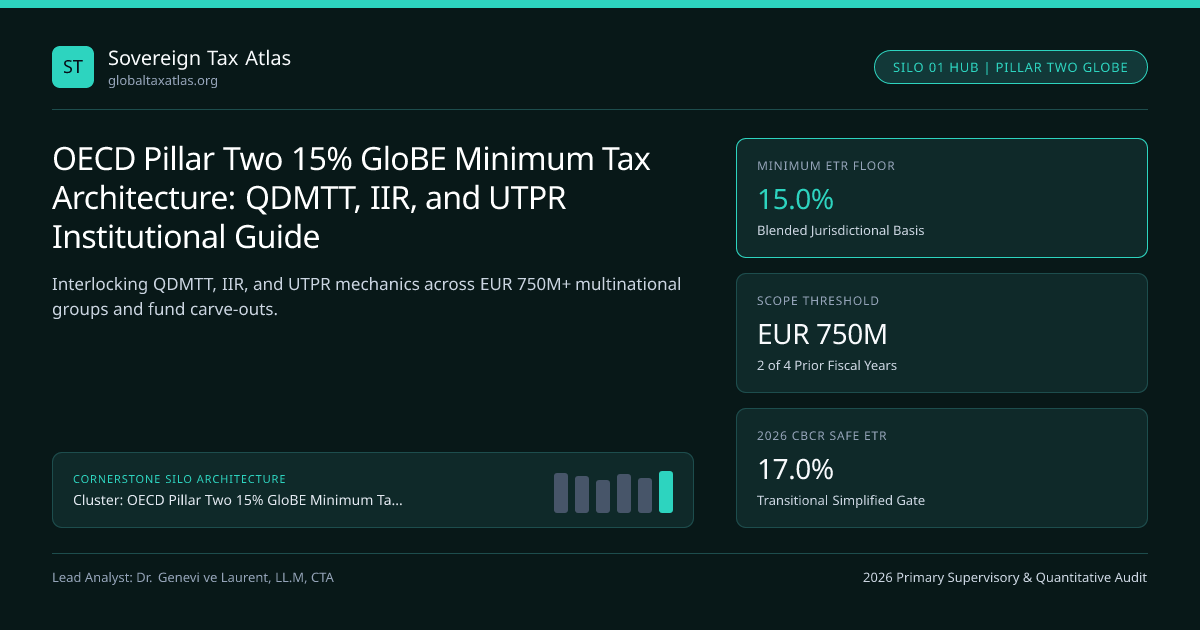
OECD Pillar Two 15% GloBE Minimum Tax Architecture: QDMTT, IIR, and UTPR Institutional Guide
Multinational enterprise groups exceeding EUR 750 million in consolidated revenue in two of four prior fiscal years face a 15.0% jurisdictional OECD Pillar Two sovereign tax floor enforced through interlocking QDMTT, IIR, and UTPR charging mechanisms.
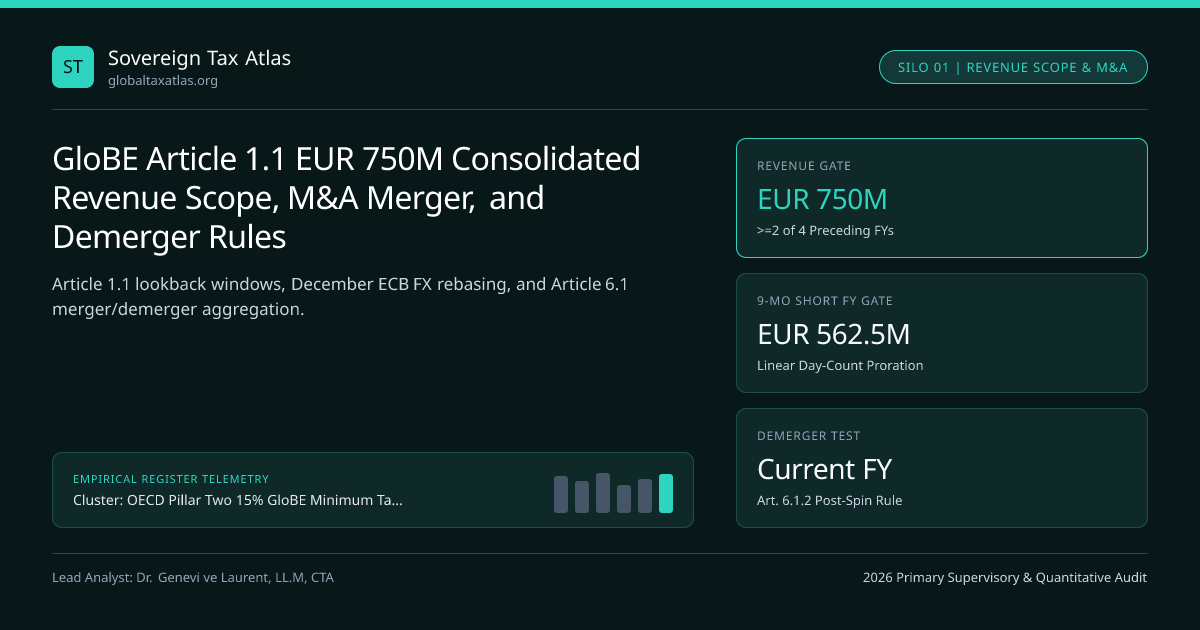
GloBE Article 1.1 EUR 750M Consolidated Revenue Scope, M&A Merger, and Demerger Rules
Determining whether a multinational corporate group crosses the EUR 750 million OECD Pillar Two sovereign tax threshold requires adjusting short fiscal periods, currency conversions, and Article 6.1 merger and demerger lookback histories.
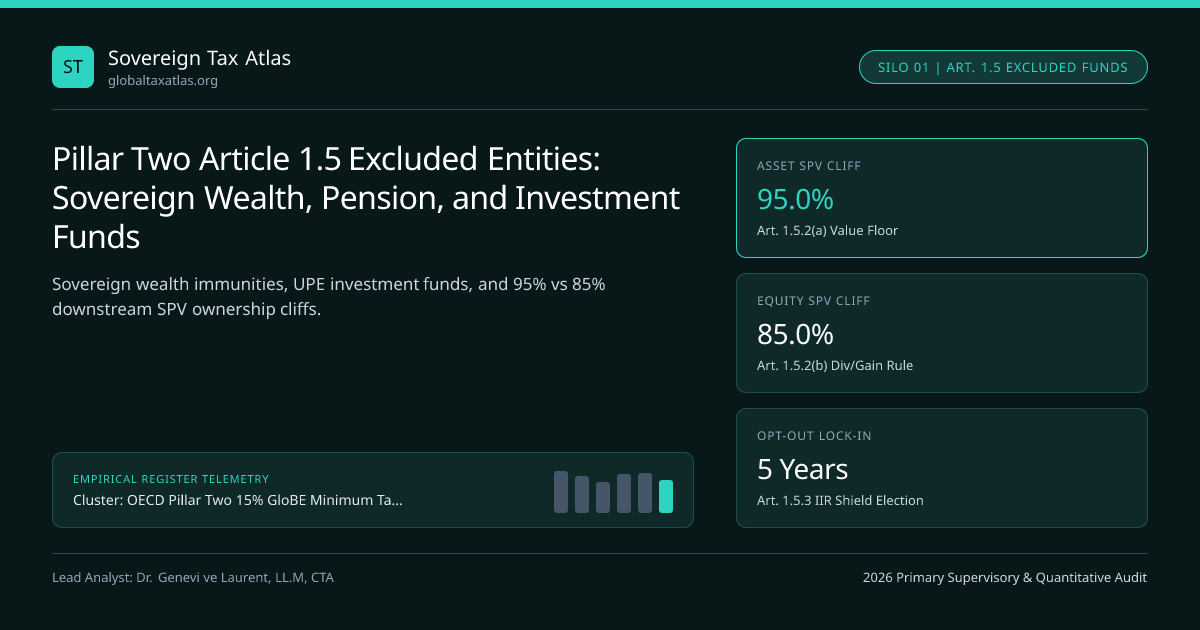
Pillar Two Article 1.5 Excluded Entities: Sovereign Wealth, Pension, and Investment Funds
OECD GloBE Article 1.5 shields Sovereign Wealth Funds, Pension Funds, UPE Investment Funds, and qualifying 95% and 85% asset-holding SPVs from 15% top-up taxation while preserving tax neutrality.
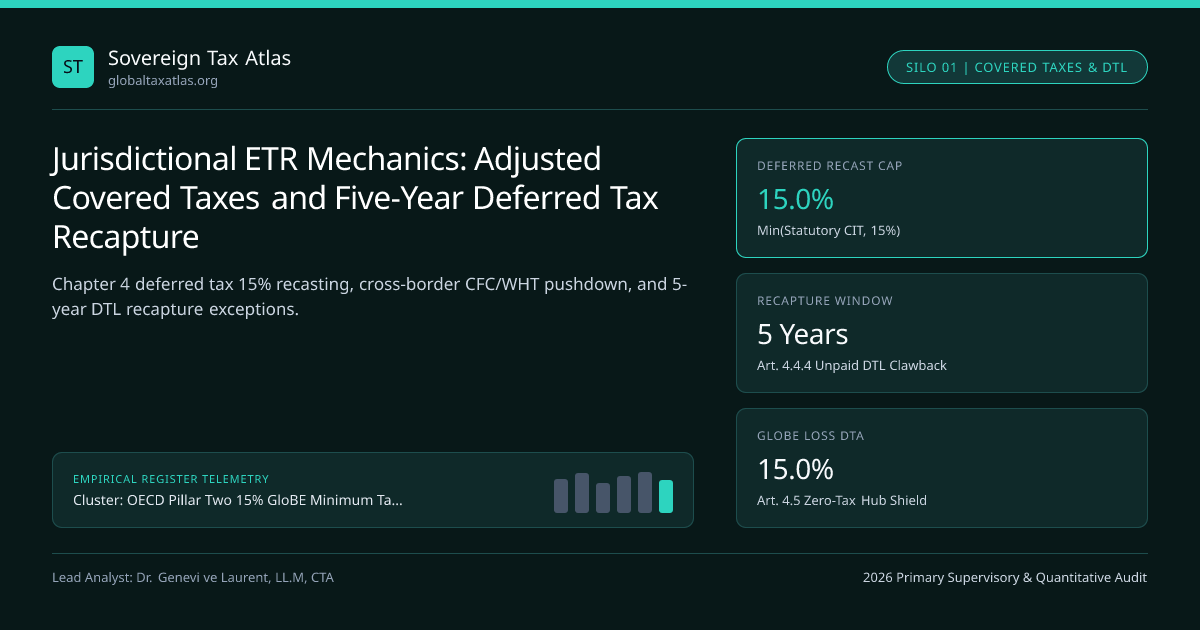
Jurisdictional ETR Mechanics: Adjusted Covered Taxes and Five-Year Deferred Tax Recapture
OECD GloBE Chapter 4 computes jurisdictional Effective Tax Rates by combining current income taxes with deferred tax adjustments recast at 15% and policed by a strict five-year recapture clock.
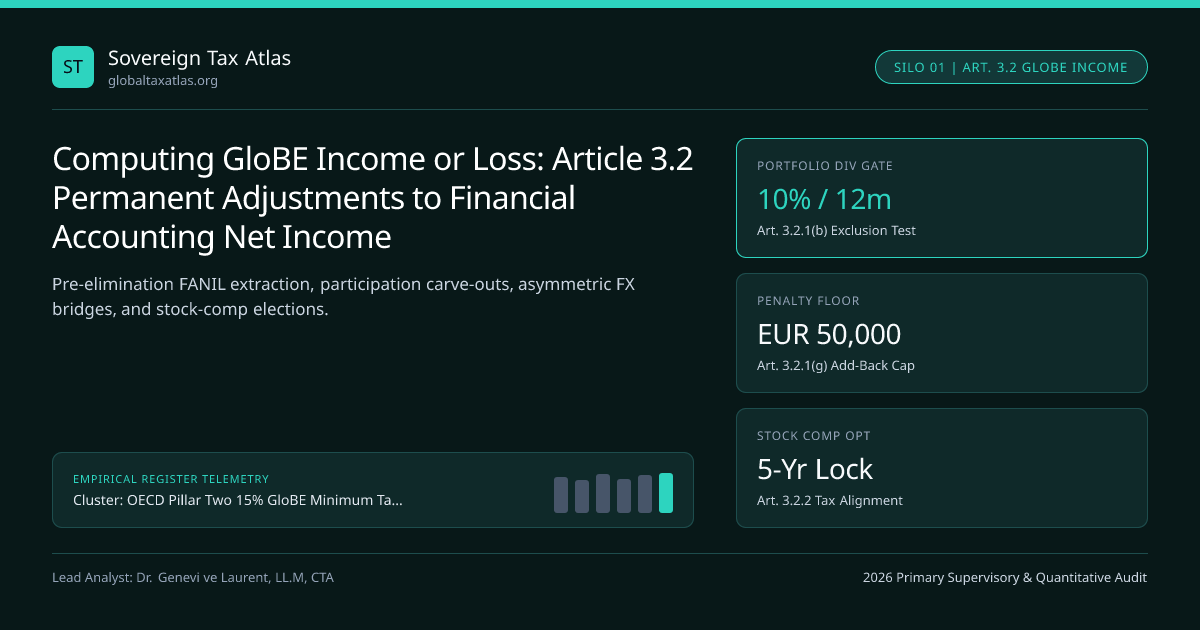
Computing GloBE Income or Loss: Article 3.2 Permanent Adjustments to Financial Accounting Net Income
OECD GloBE Article 3.2 converts each Constituent Entity pre-consolidation Financial Accounting Net Income or Loss into the ETR denominator through mandatory permanent adjustments and tax-alignment elections.
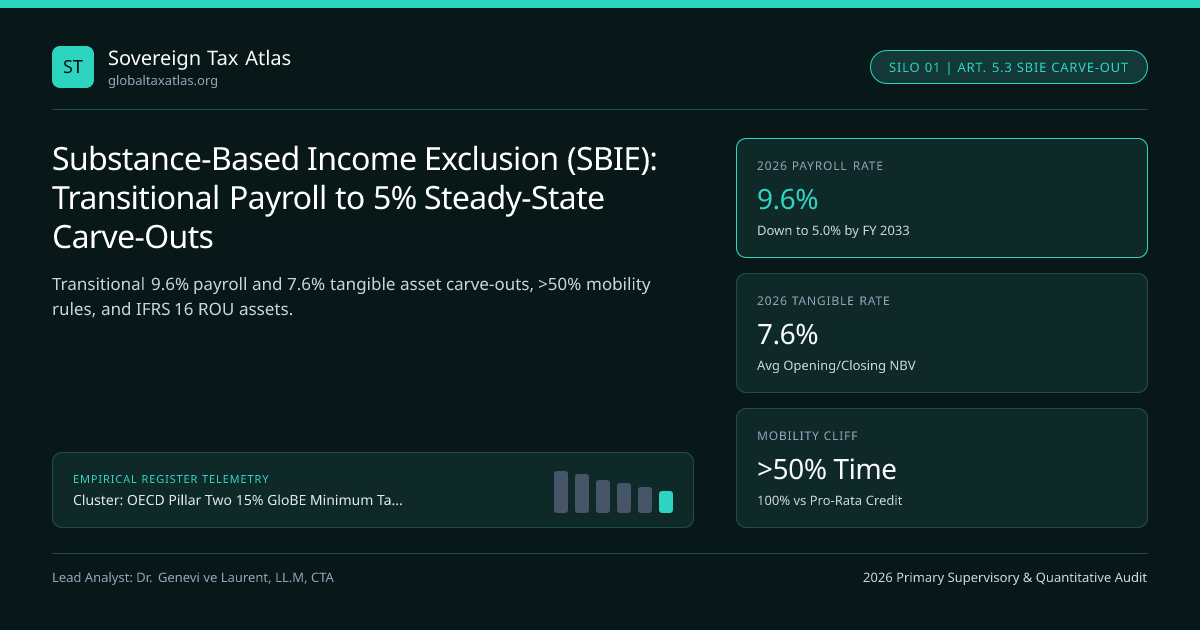
Substance-Based Income Exclusion (SBIE): Transitional Payroll to 5% Steady-State Carve-Outs
OECD GloBE Article 5.3 shelters routine returns on physical operations from the 15% top-up tax by deducting transitional percentages of Eligible Payroll Costs and Eligible Tangible Assets before converging at 5% in 2033.
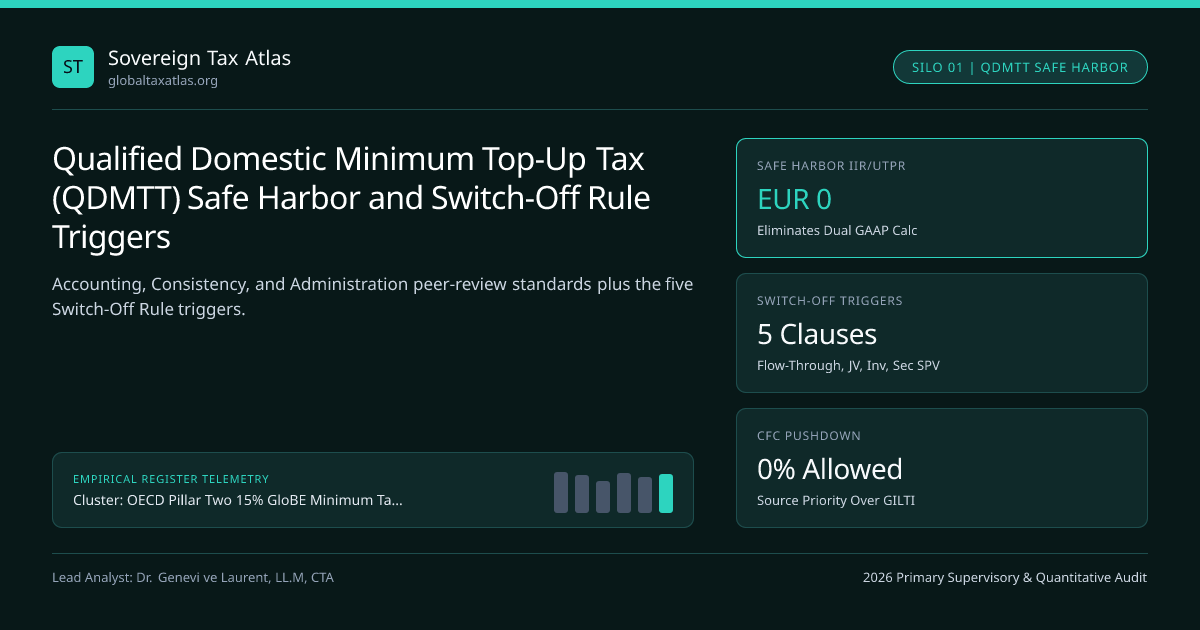
Qualified Domestic Minimum Top-Up Tax (QDMTT) Safe Harbor and Switch-Off Rule Triggers
Enacting a Qualified Domestic Minimum Top-Up Tax (QDMTT) that earns OECD Safe Harbor status zeroes out foreign IIR and UTPR liabilities—unless one of five Switch-Off Rule exceptions forces dual calculations.
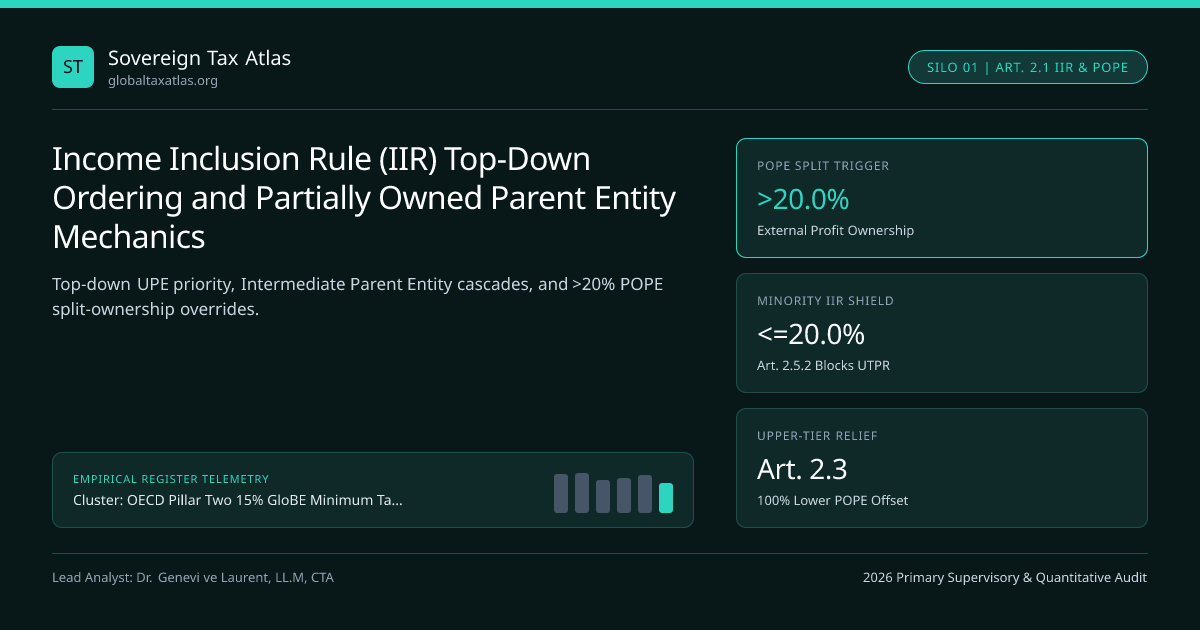
Income Inclusion Rule (IIR) Top-Down Ordering and Partially Owned Parent Entity Mechanics
OECD GloBE Articles 2.1 through 2.3 enforce the Income Inclusion Rule from the Ultimate Parent Entity downward—except where a Partially Owned Parent Entity with over 20% external ownership takes statutory priority.
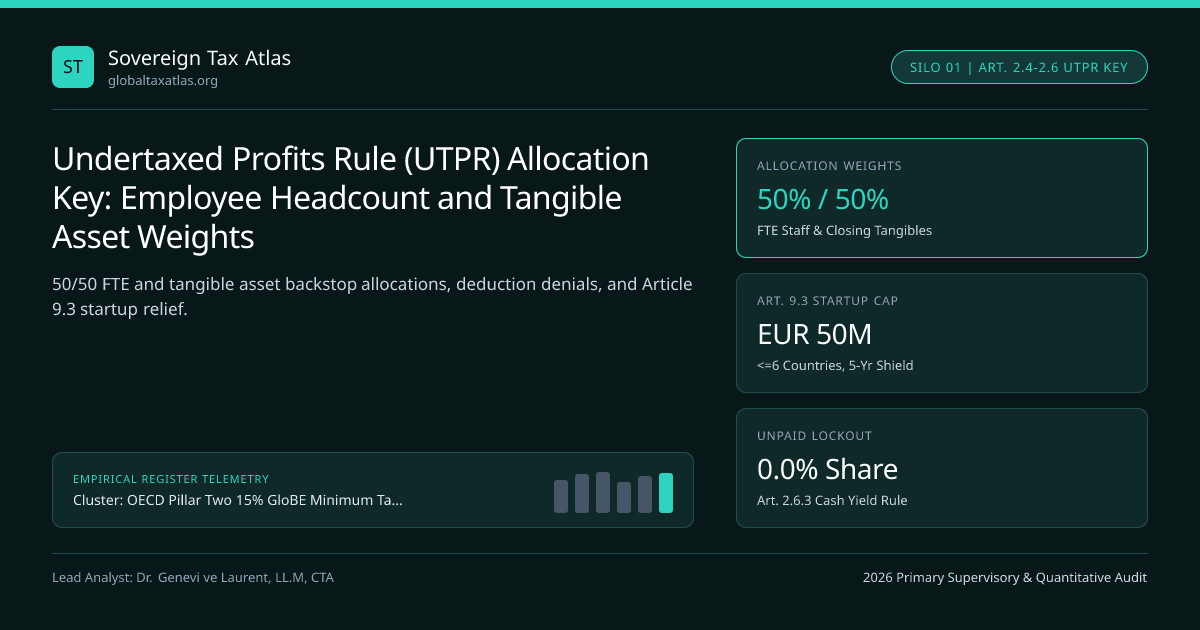
Undertaxed Profits Rule (UTPR) Allocation Key: Employee Headcount and Tangible Asset Weights
OECD GloBE Articles 2.4 through 2.6 enforce the Undertaxed Profits Rule backstop by allocating uncaptured top-up tax across implementing jurisdictions weighted 50% by FTE headcount and 50% by tangible assets.
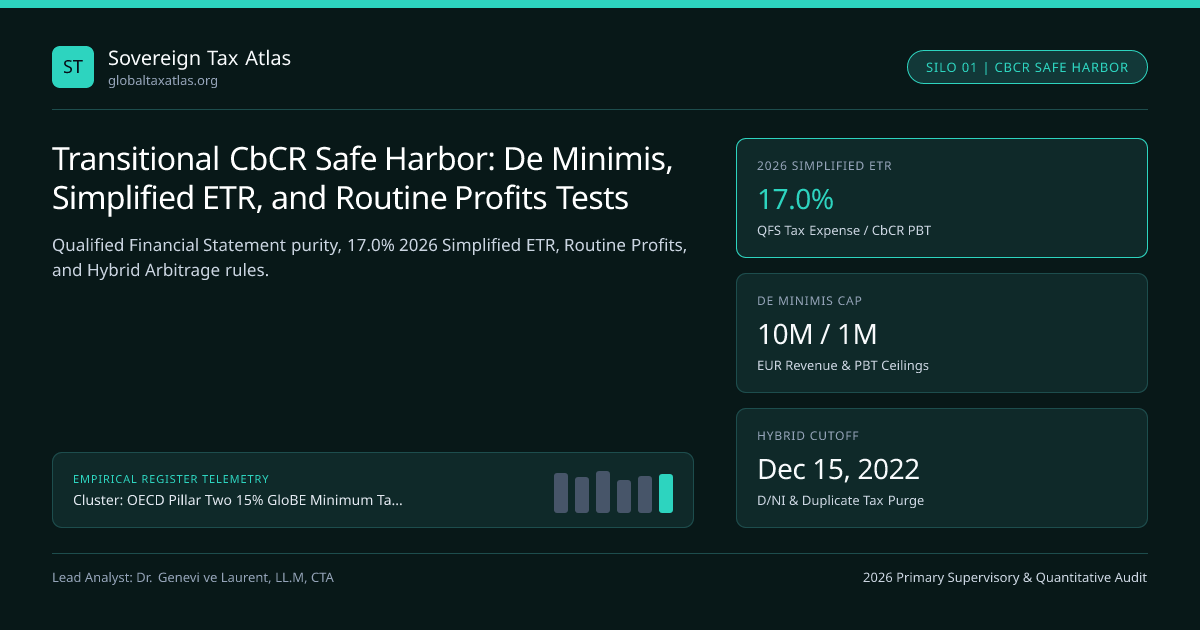
Transitional CbCR Safe Harbor: De Minimis, Simplified ETR, and Routine Profits Tests
Through fiscal years starting in 2026, the OECD Transitional CbCR Safe Harbor zeroes out jurisdictional Pillar Two top-up tax via De Minimis, 17.0% Simplified ETR, or Routine Profits gates—subject to strict anti-hybrid-arbitrage rules.
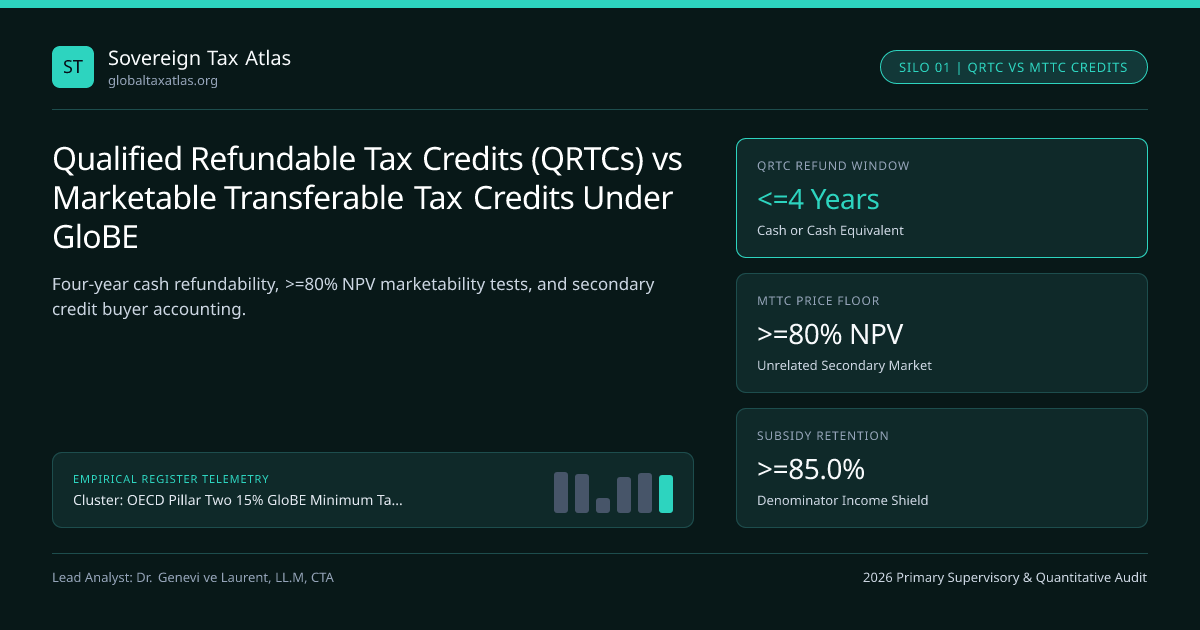
Qualified Refundable Tax Credits (QRTCs) vs Marketable Transferable Tax Credits Under GloBE
Under OECD GloBE Articles 3.2.4 and 4.1.3, Qualified Refundable Tax Credits and Marketable Transferable Tax Credits preserve jurisdictional ETR as denominator income rather than slashing Covered Taxes.
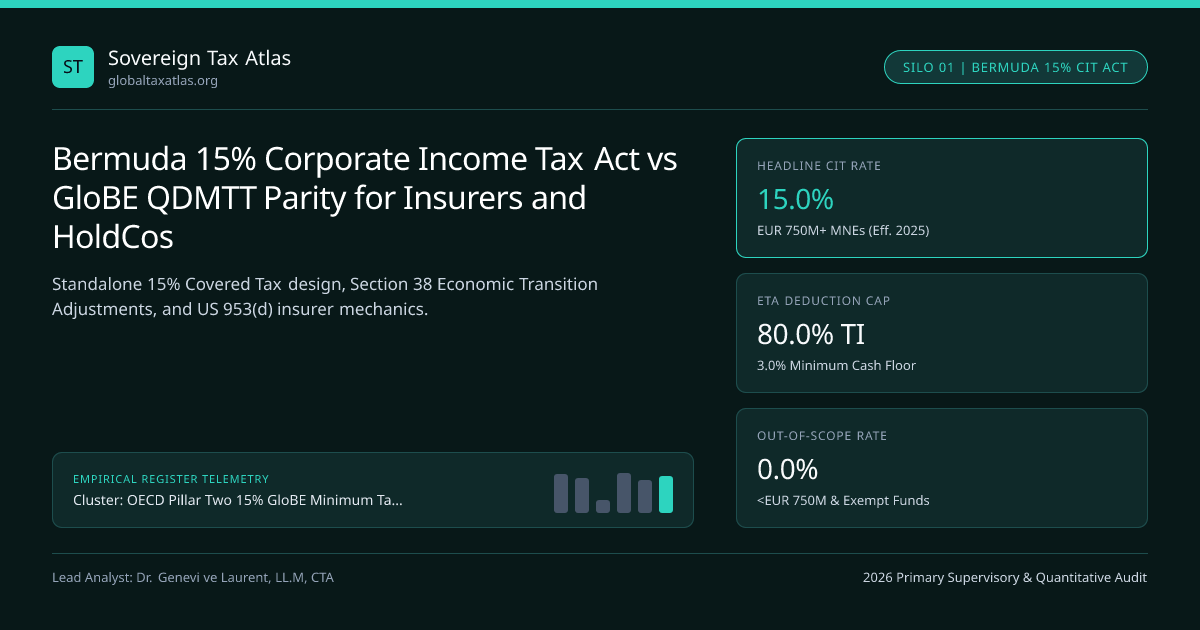
Bermuda 15% Corporate Income Tax Act vs GloBE QDMTT Parity for Insurers and HoldCos
Effective January 1, 2025, Bermuda replaced zero-rate tax assurance certificates for EUR 750M+ MNE groups with a standalone 15.0% Corporate Income Tax featuring Economic Transition Adjustments.
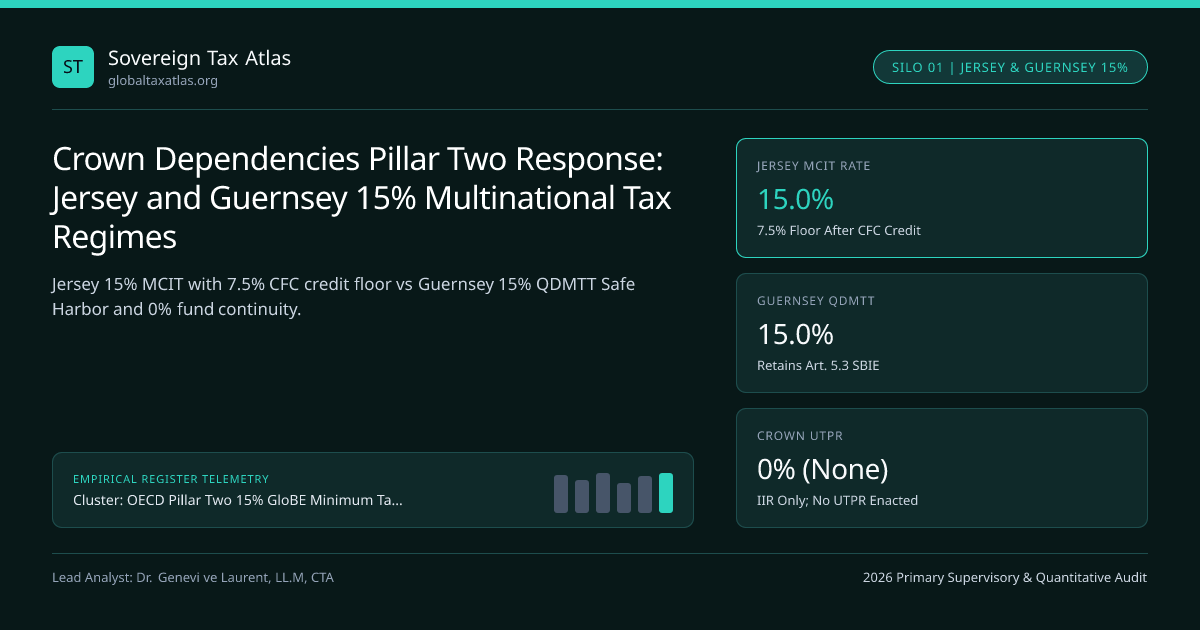
Crown Dependencies Pillar Two Response: Jersey and Guernsey 15% Multinational Tax Regimes
Effective January 1, 2025, Jersey, Guernsey, and the Isle of Man diverged sharply in Pillar Two implementation—pairing Guernsey and Isle of Man QDMTTs with Jersey innovative 15% Multinational Corporate Income Tax (MCIT).
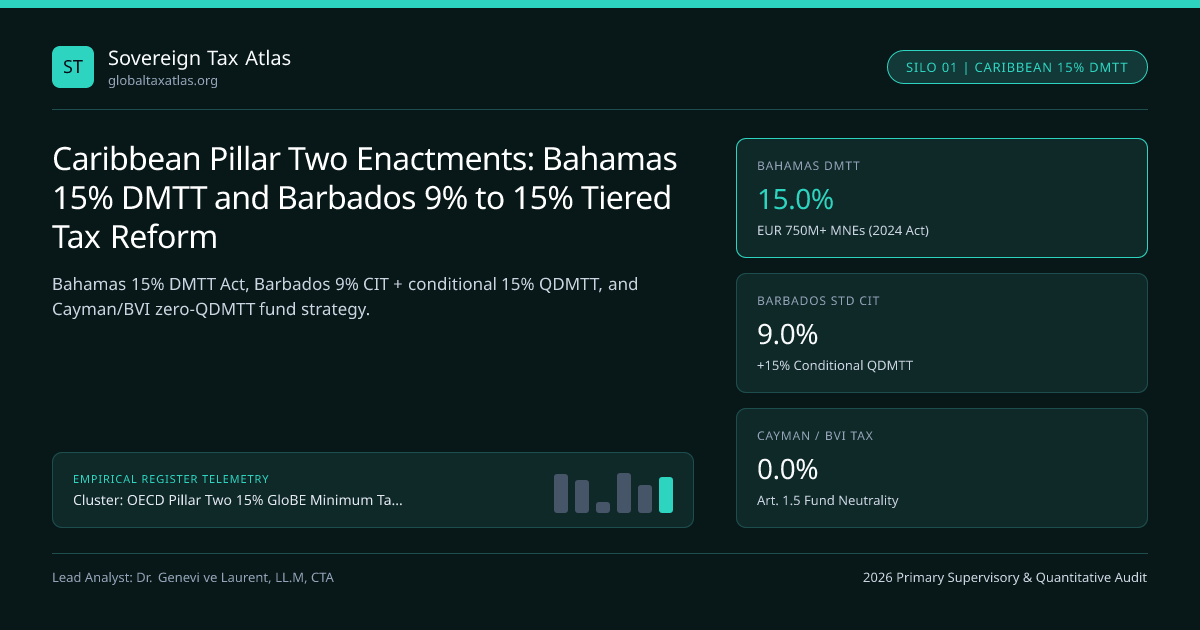
Caribbean Pillar Two Enactments: Bahamas 15% DMTT and Barbados 9% to 15% Tiered Tax Reform
Caribbean offshore centers split into three Pillar Two camps: The Bahamas enacted a pure 15% DMTT, Barbados paired a 9% CIT overhaul with a conditional 15% QDMTT, and Cayman/BVI retained 0% without a QDMTT.
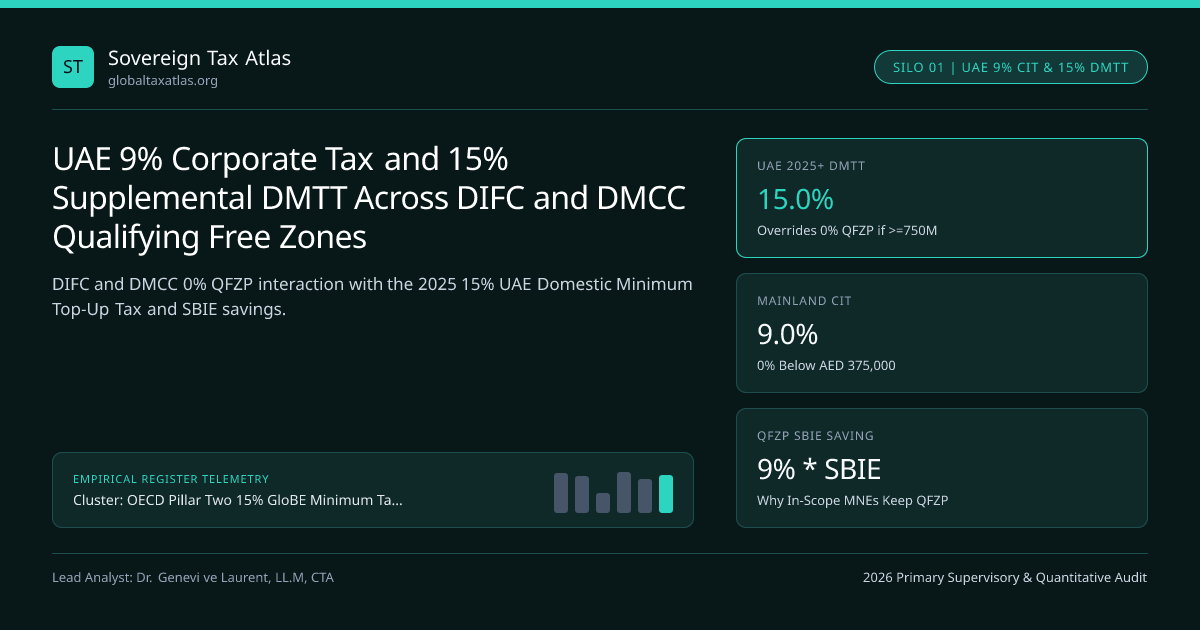
UAE 9% Corporate Tax and 15% Supplemental DMTT Across DIFC and DMCC Qualifying Free Zones
Effective for fiscal years starting January 1, 2025, the UAE imposed a 15.0% Domestic Minimum Top-Up Tax on EUR 750M+ MNEs—overriding both the 9% mainland corporate tax and the 0% DIFC and DMCC Qualifying Free Zone rate.
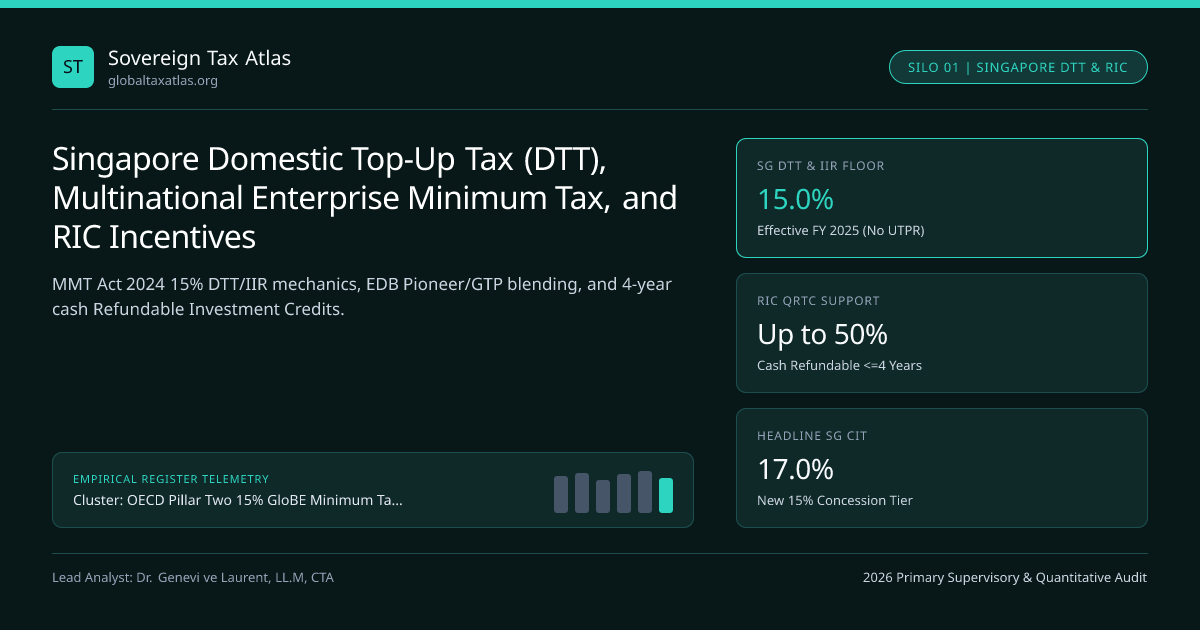
Singapore Domestic Top-Up Tax (DTT), Multinational Enterprise Minimum Tax, and RIC Incentives
Under the Multinational Enterprise (Minimum Tax) Act 2024, Singapore enacted a 15.0% Domestic Top-Up Tax and IIR from FY 2025 while launching Refundable Investment Credits (RIC) to replace 5%–10% EDB tax holidays.
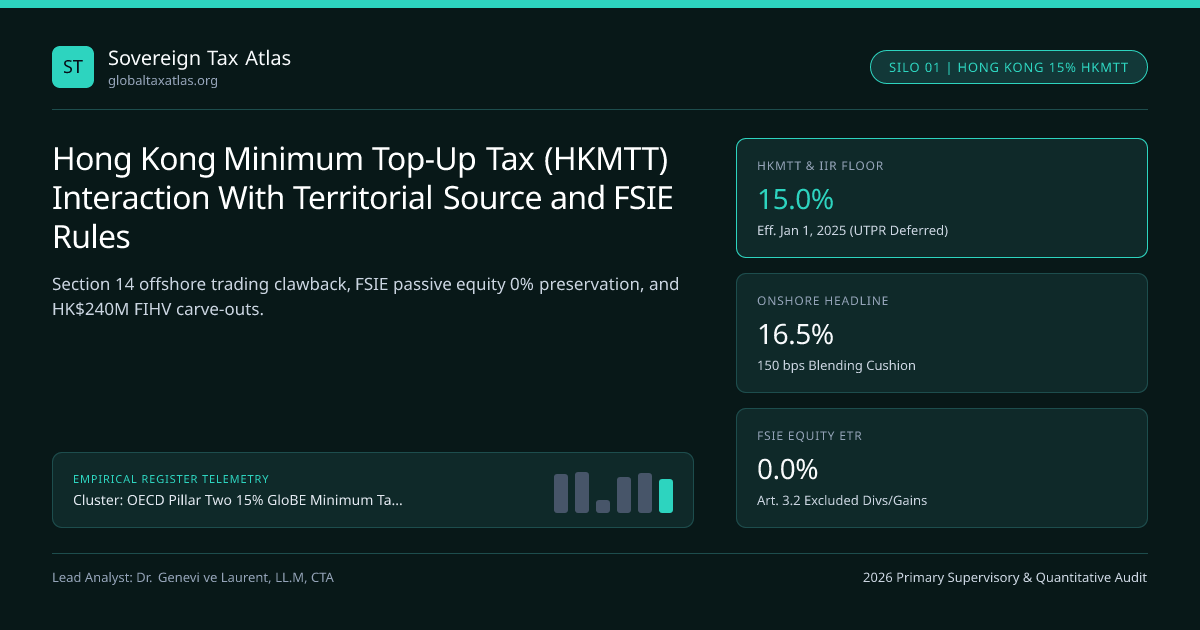
Hong Kong Minimum Top-Up Tax (HKMTT) Interaction With Territorial Source and FSIE Rules
Enacting the 15.0% Hong Kong Minimum Top-Up Tax (HKMTT) and IIR from January 1, 2025 taxes offshore-sourced active trading profits of EUR 750M+ MNEs for the first time while preserving 0% HK$240M family office exemptions.
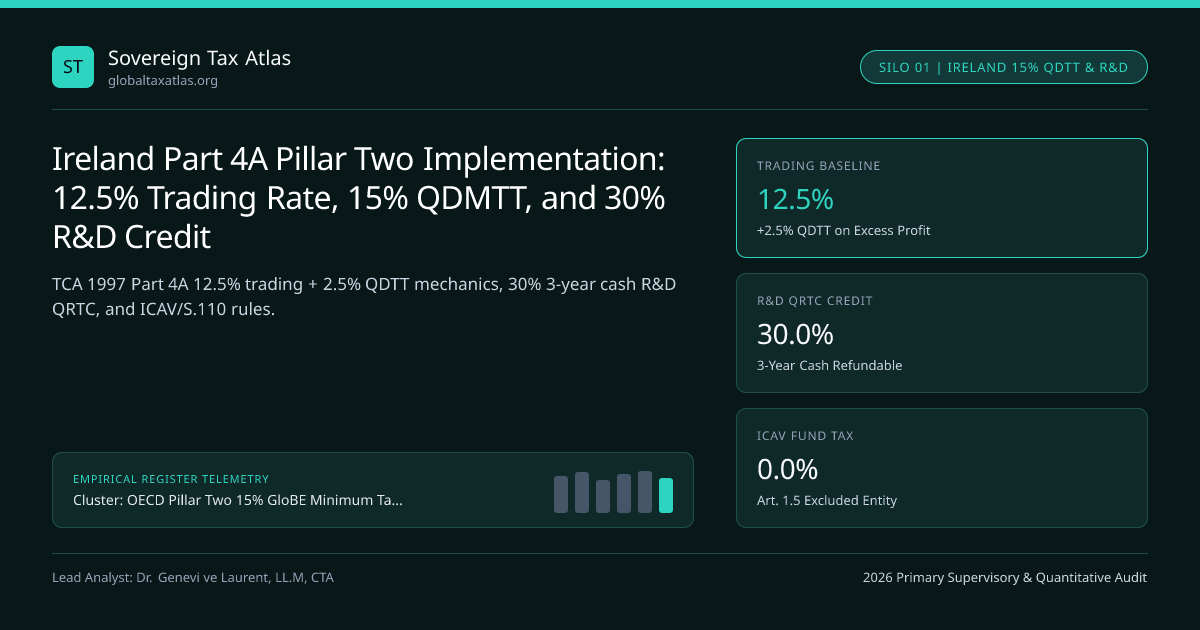
Ireland Part 4A Pillar Two Implementation: 12.5% Trading Rate, 15% QDMTT, and 30% R&D Credit
Enacted in Part 4A of the Taxes Consolidation Act 1997, Ireland preserves its 12.5% trading tax below EUR 750M while pairing a Safe-Harbor 15.0% QDTT with an enhanced 30.0% Qualified Refundable R&D Tax Credit.
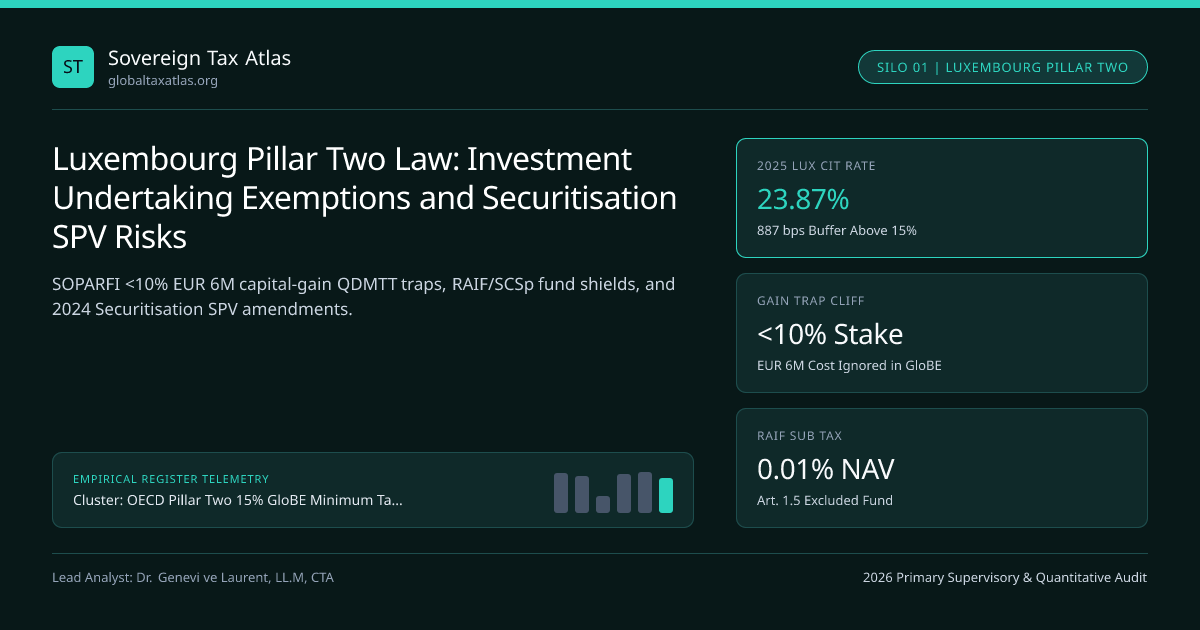
Luxembourg Pillar Two Law: Investment Undertaking Exemptions and Securitisation SPV Risks
Luxembourg Law of 22 December 2023 (as amended in 2024) shields RAIF, SIF, and SCSp investment funds under Article 1.5 while navigating SOPARFI equity carve-outs and Securitisation Law SPV exemptions.
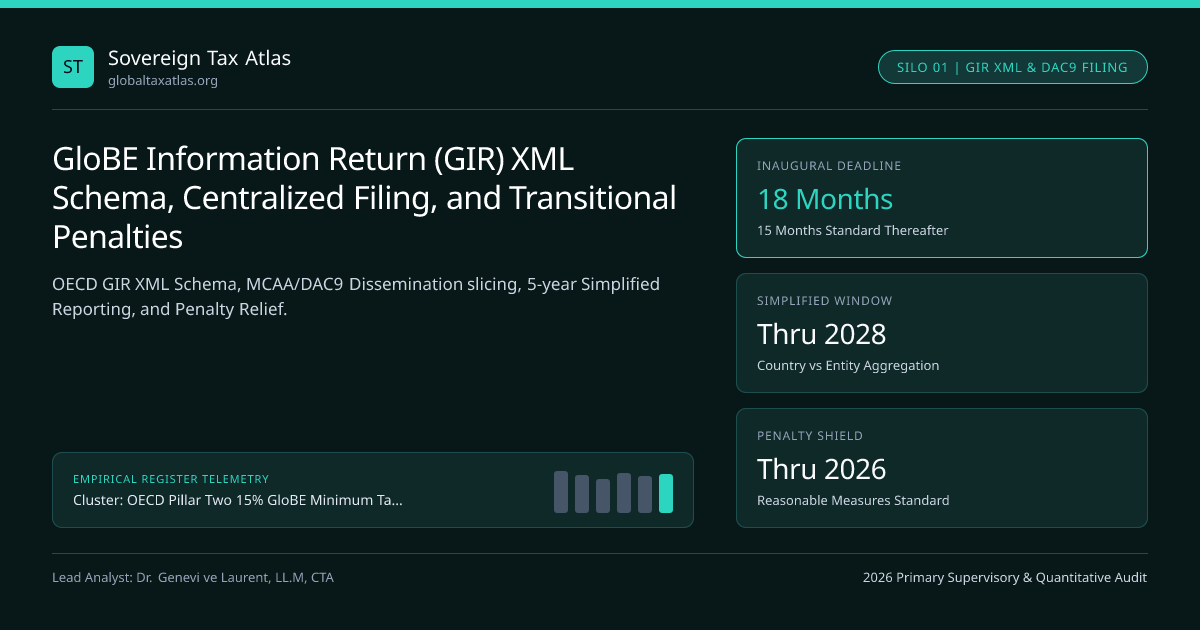
GloBE Information Return (GIR) XML Schema, Centralized Filing, and Transitional Penalties
Every in-scope MNE Group must file a standardized OECD GloBE Information Return XML package within 15 months (18 months in Year 1), leveraging MCAA exchange and 5-year Transitional Simplified Reporting.