
Editorial Research Index
Institutional briefings & primary regulatory analysis
Financial analysis and briefings published by Sovereign Tax Atlas.
20 matching briefings
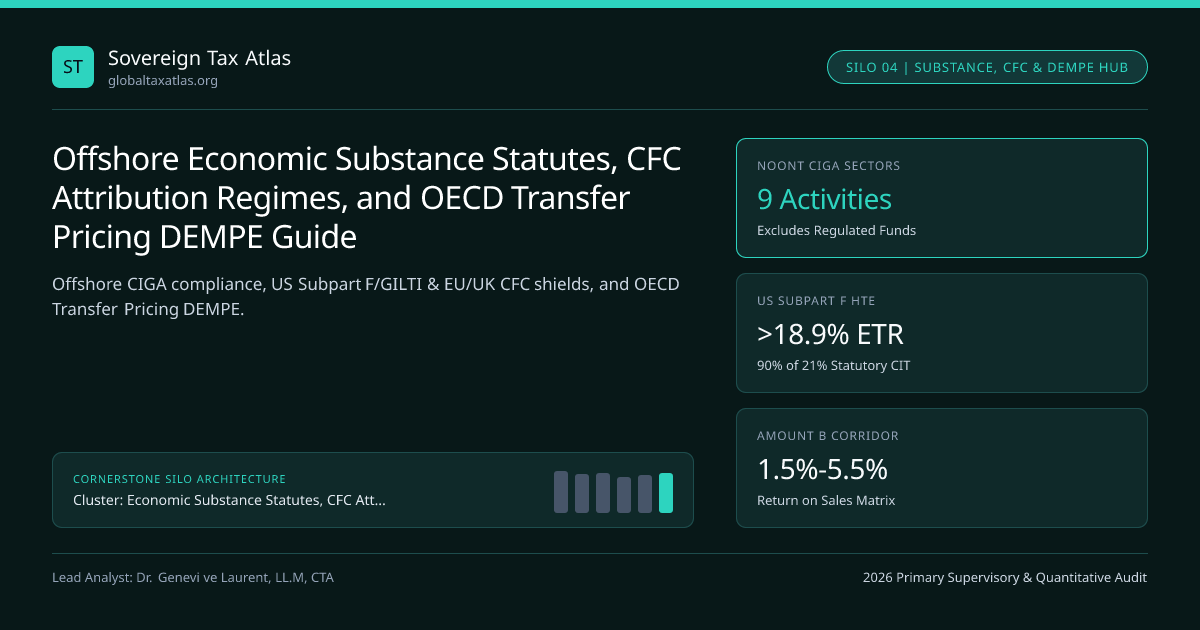
Offshore Economic Substance Statutes, CFC Attribution Regimes, and OECD Transfer Pricing DEMPE Guide
Modern international corporate structuring enforces a three-sided vise: offshore CIGA Economic Substance statutes, parent-level Controlled Foreign Company (CFC) look-through taxes, and OECD Transfer Pricing DEMPE profit allocation.
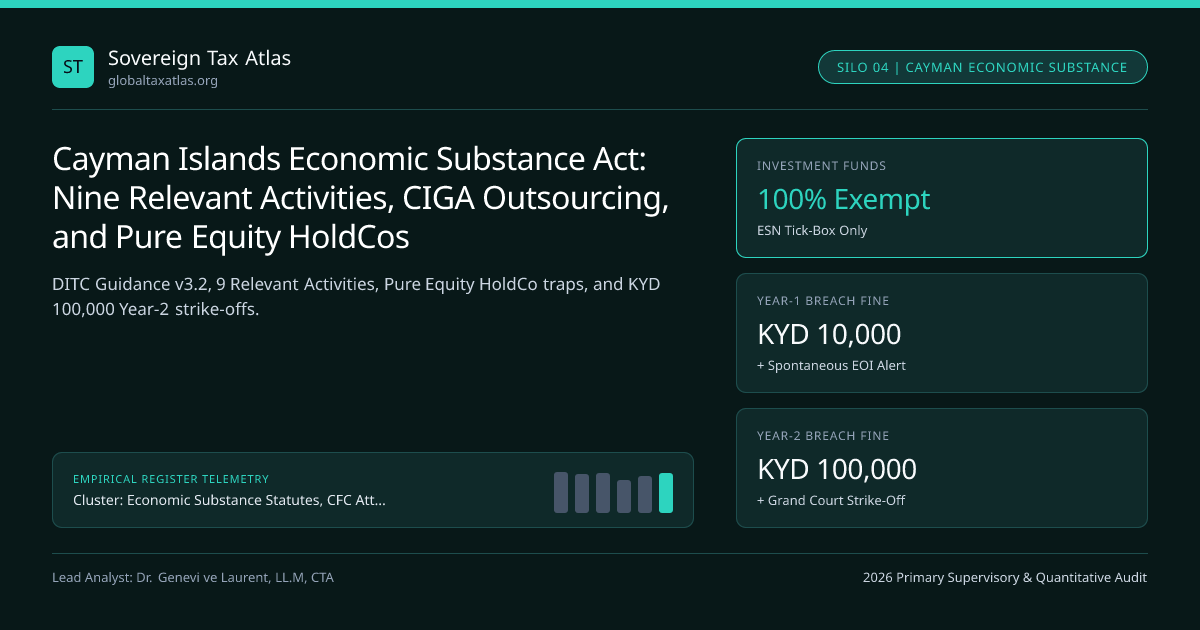
Cayman Islands Economic Substance Act: Nine Relevant Activities, CIGA Outsourcing, and Pure Equity HoldCos
Enforced by the Cayman Tax Information Authority across Exempted Companies, LLCs, and partnerships, the Cayman Economic Substance Act tests nine Relevant Activities while carving out Investment Funds and Foreign Tax Residents.
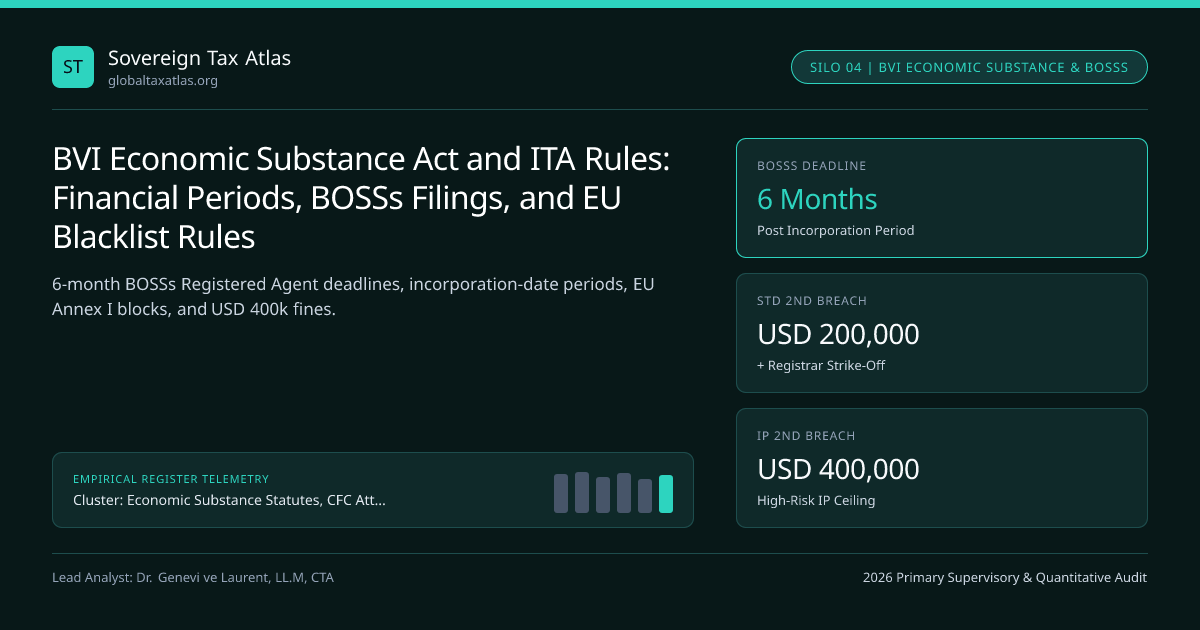
BVI Economic Substance Act and ITA Rules: Financial Periods, BOSSs Filings, and EU Blacklist Rules
Enforced by the BVI International Tax Authority via the Registered Agent BOSSs database, the BVI Economic Substance Act enforces strict 6-month filing deadlines, Rule v4 foreign-residency proofs, and USD 400,000 IP fines.
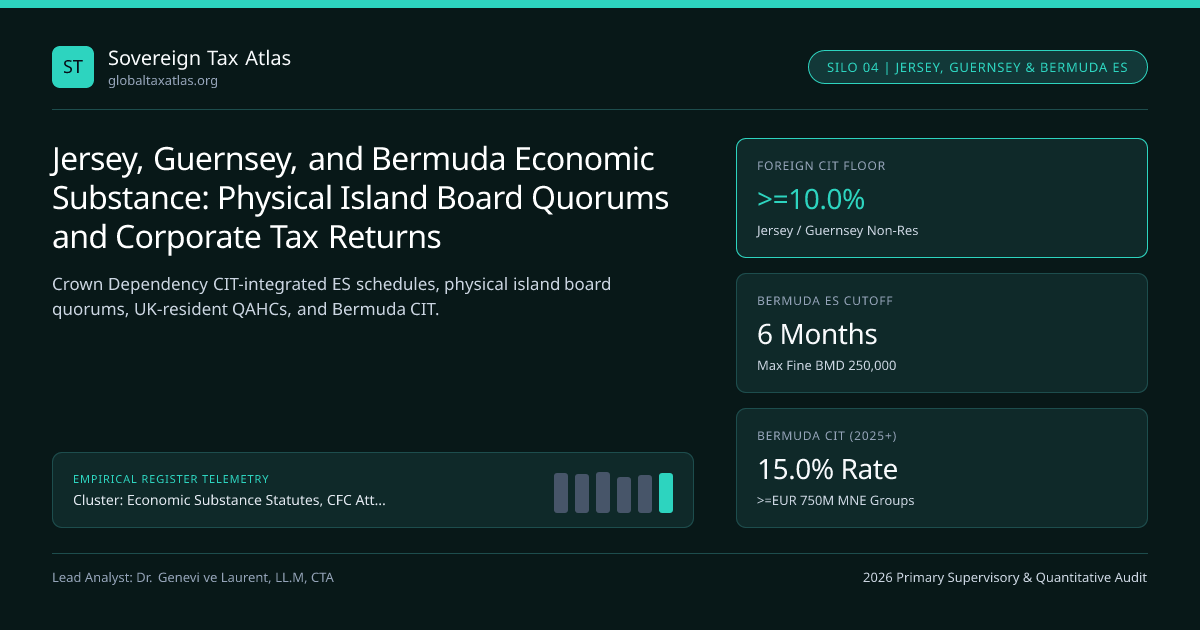
Jersey, Guernsey, and Bermuda Economic Substance: Physical Island Board Quorums and Corporate Tax Returns
Unlike Caribbean registry portals, Jersey and Guernsey integrate Economic Substance directly into mandatory online Corporate Income Tax returns—while Bermuda pairs its Economic Substance Act with its new 15% Corporate Income Tax.
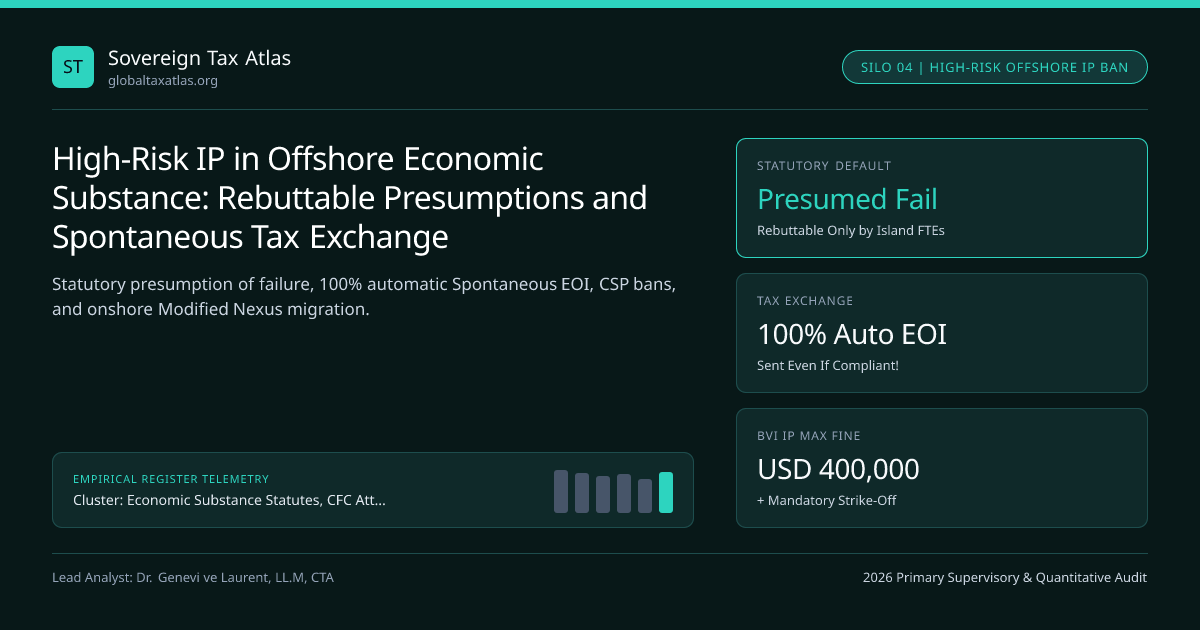
High-Risk IP in Offshore Economic Substance: Rebuttable Presumptions and Spontaneous Tax Exchange
Offshore Intellectual Property companies that acquire IP from affiliates or monetize IP via foreign group companies without local R&D face a statutory presumption of failure and automatic spontaneous tax exchange—even when compliant!
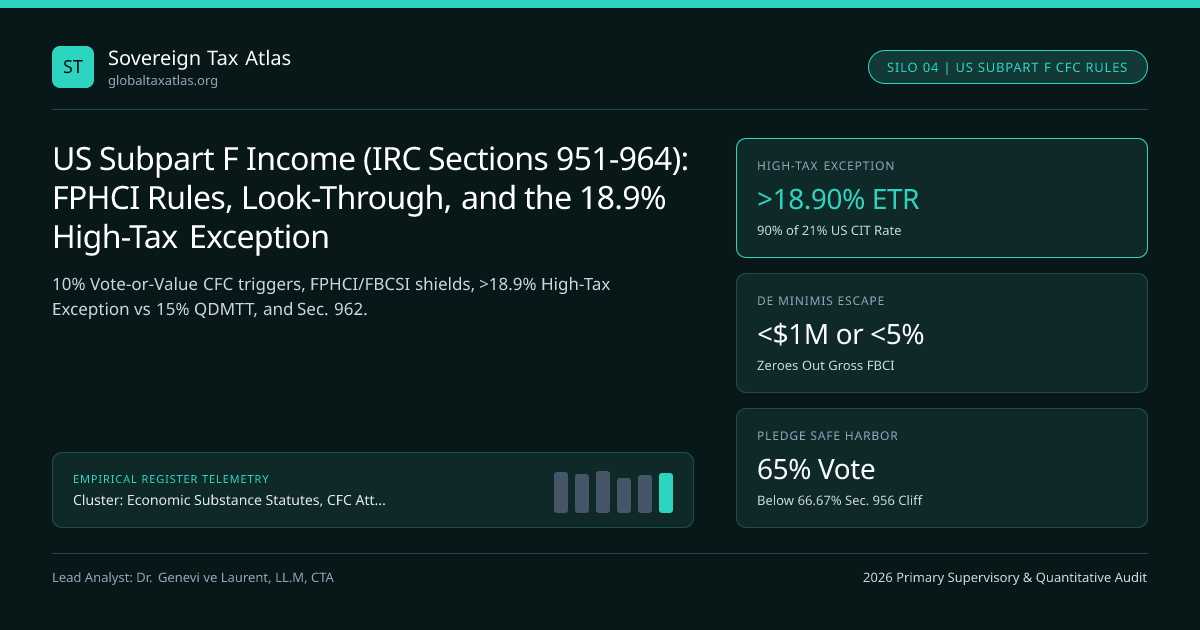
US Subpart F Income (IRC Sections 951–964): FPHCI Rules, Look-Through, and the 18.9% High-Tax Exception
Enacted in 1962 as the world original anti-deferral statute, US Subpart F taxes 10%+ US Shareholders currently at 21% corporate (or 37% individual) rates on CFC passive income and related-party sales—unless shielded by Section 954(c)(6) or the >18.9% High-Tax Exception.
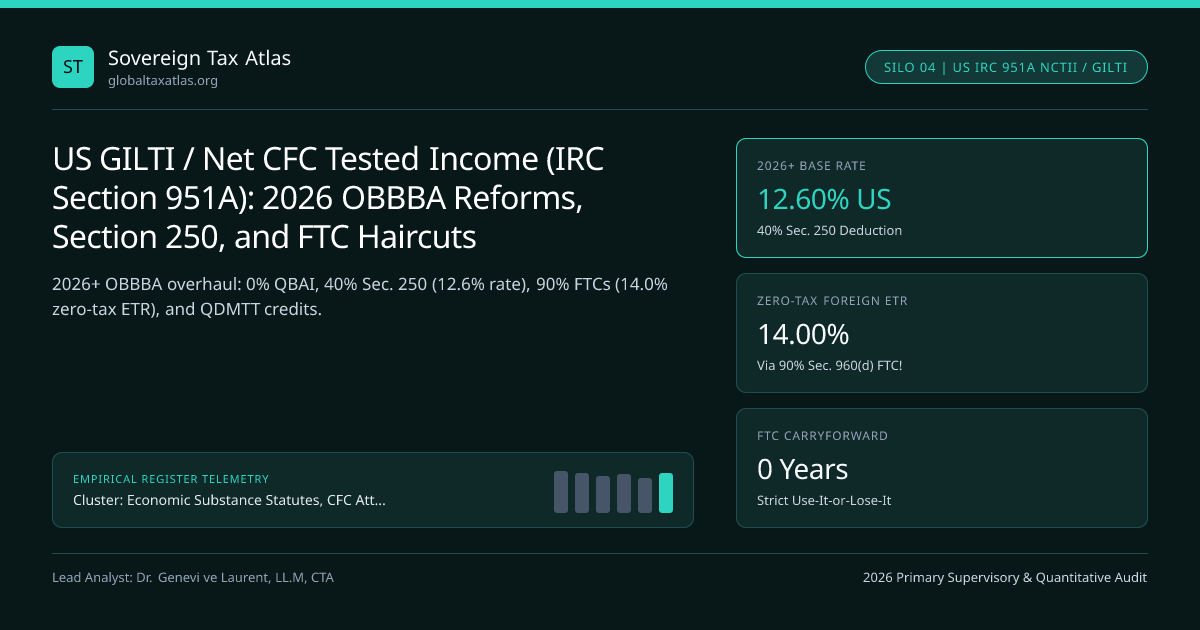
US GILTI / Net CFC Tested Income (IRC Section 951A): 2026 OBBBA Reforms, Section 250, and FTC Haircuts
Overhauled for taxable years beginning after December 31, 2025 under the One Big Beautiful Bill Act (OBBBA), IRC Section 951A transforms GILTI into Net CFC Tested Income (NCTII)—repealing 10% QBAI while setting a 12.6%–14.0% effective band.
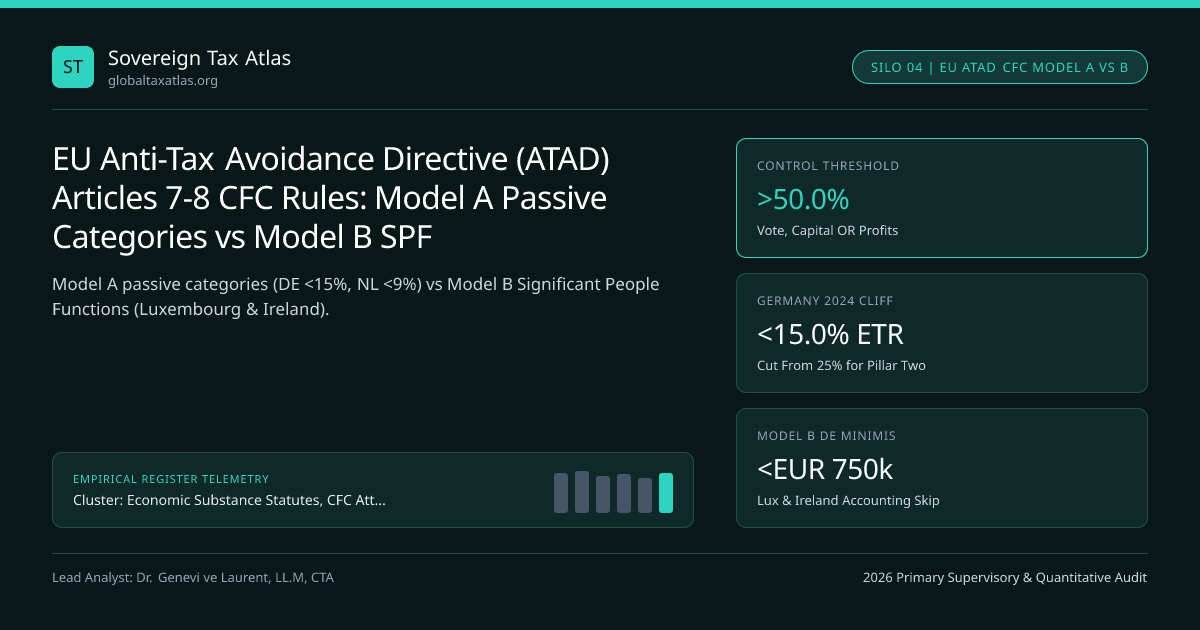
EU Anti-Tax Avoidance Directive (ATAD) Articles 7–8 CFC Rules: Model A Passive Categories vs Model B SPF
Articles 7 and 8 of the EU Anti-Tax Avoidance Directive mandate a minimum CFC baseline across all 27 Member States—splitting Europe between categorical Model A countries (Germany, France, Netherlands, Ireland) and transfer-pricing Model B countries (Luxembourg).
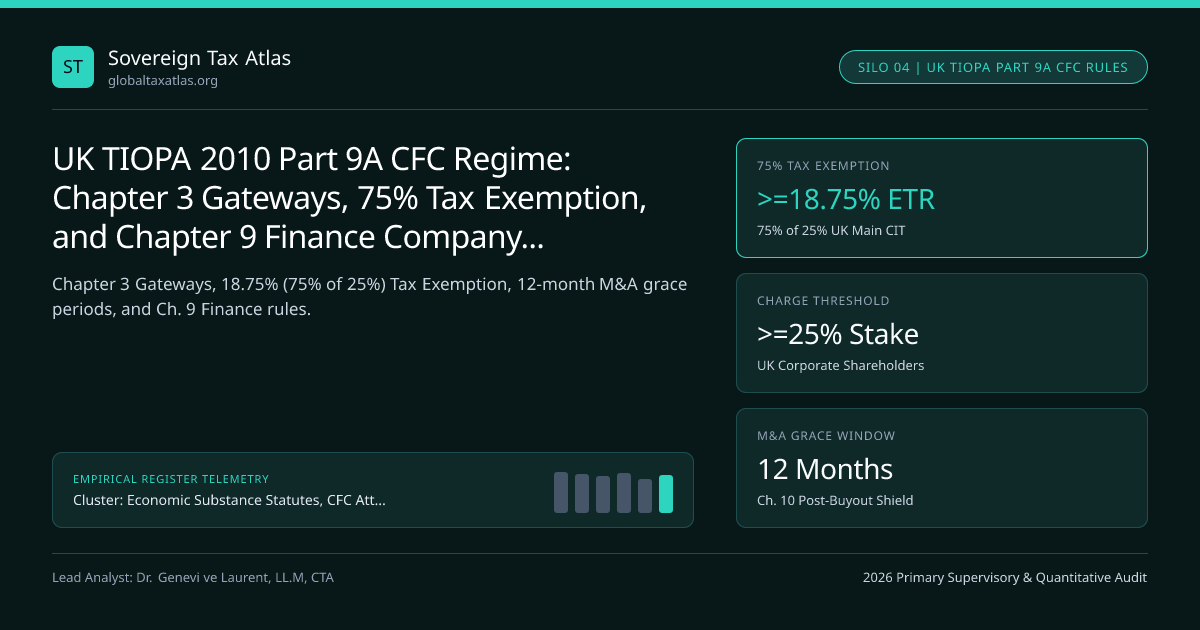
UK TIOPA 2010 Part 9A CFC Regime: Chapter 3 Gateways, 75% Tax Exemption, and Chapter 9 Finance Company Rules
Widely regarded as the most technically sophisticated territorial CFC statute in the OECD, Part 9A of UK TIOPA 2010 taxes foreign subsidiaries ONLY to the extent profits pass through targeted UK-diversion CFC Charge Gateways.
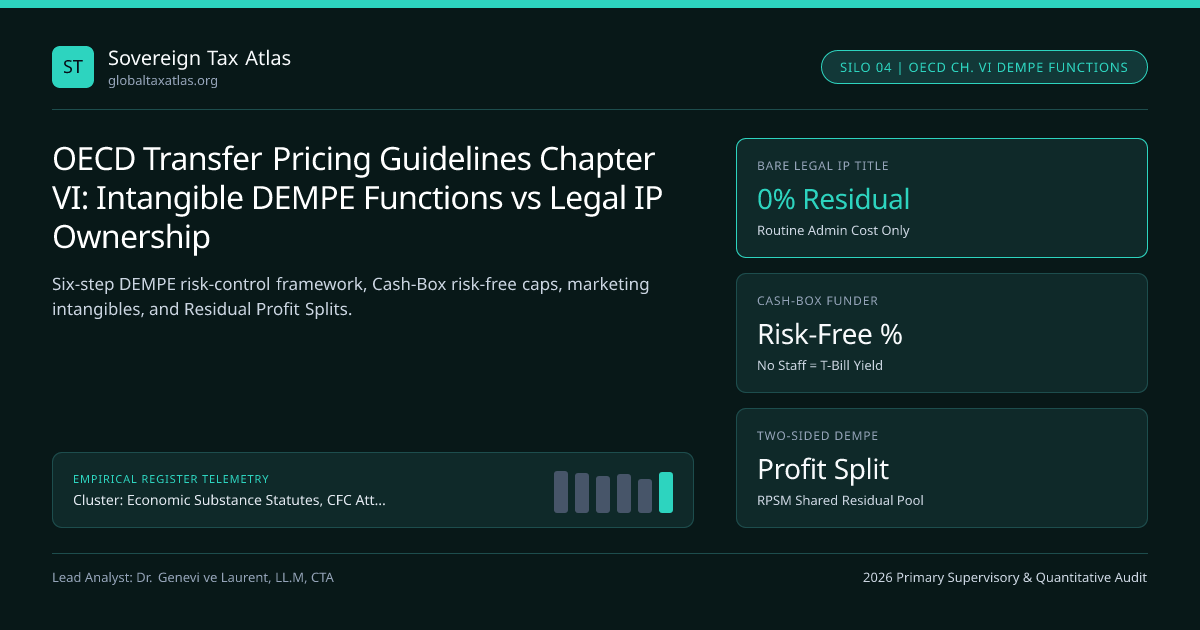
OECD Transfer Pricing Guidelines Chapter VI: Intangible DEMPE Functions vs Legal IP Ownership
Under BEPS Actions 8–10 embedded in Chapter VI of the OECD Transfer Pricing Guidelines, legal ownership of patents, algorithms, and brands confers ZERO right to residual intangible returns without human control over DEMPE functions and risks.
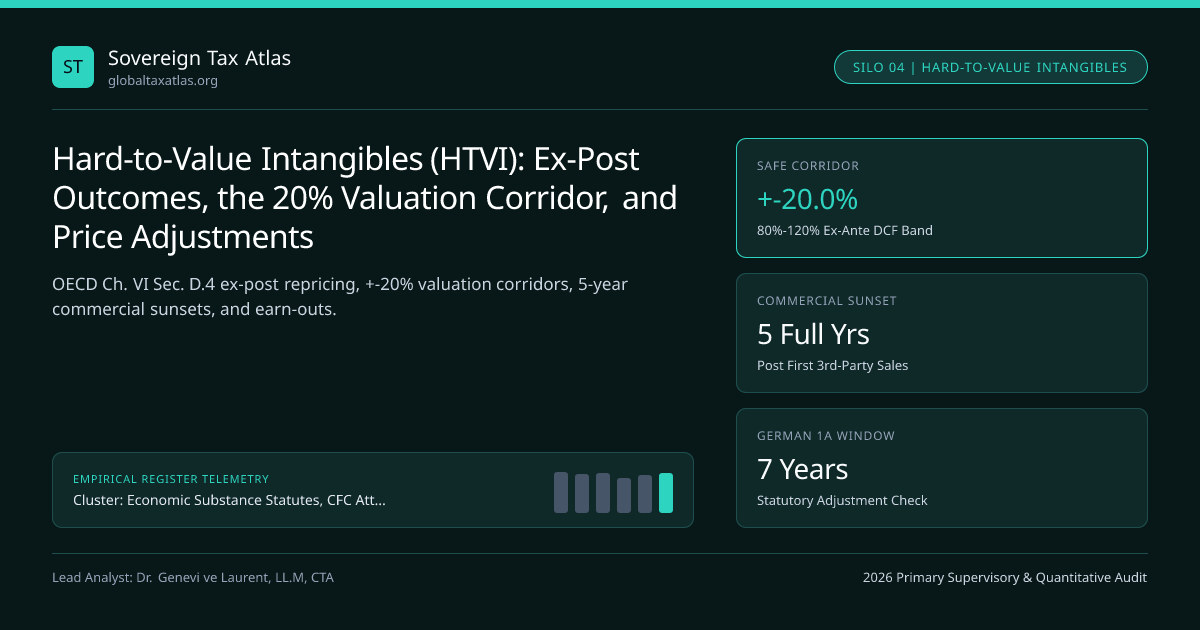
Hard-to-Value Intangibles (HTVI): Ex-Post Outcomes, the 20% Valuation Corridor, and Price Adjustments
OECD Transfer Pricing Guidelines Section D.4 (and US IRC Section 482 commensurate-with-income rules) empower tax auditors to use actual ex-post financial results to reprice early-stage IP transfers—unless protected by a 20% corridor or four statutory exemptions.
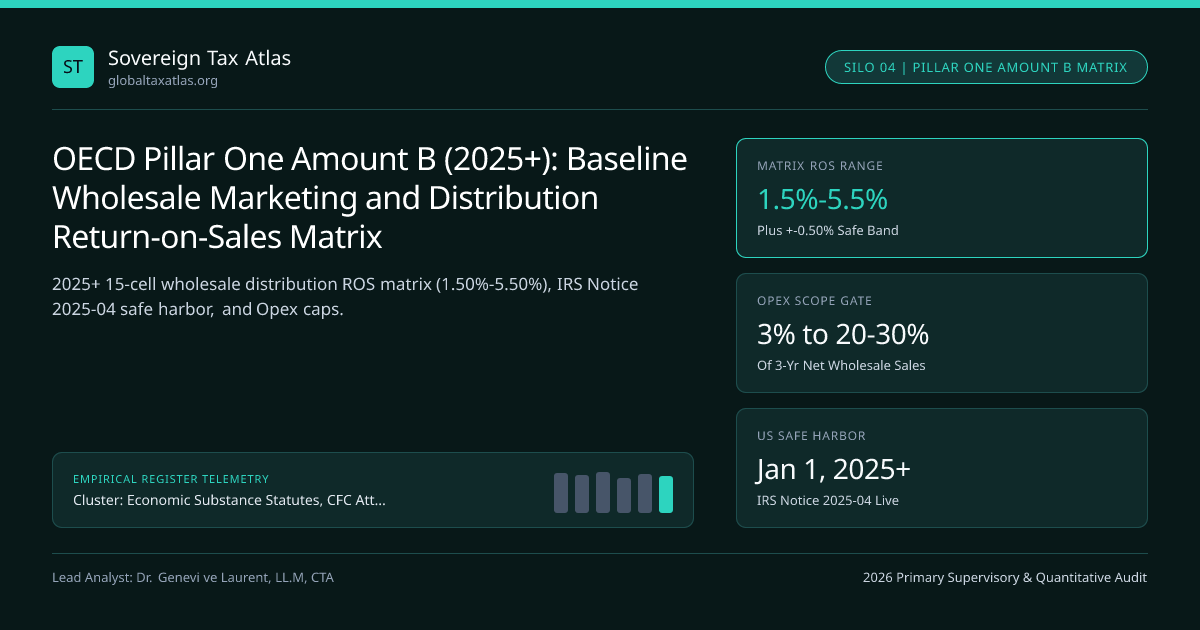
OECD Pillar One Amount B (2025+): Baseline Wholesale Marketing and Distribution Return-on-Sales Matrix
Incorporated directly into the Annex to Chapter IV of the OECD Transfer Pricing Guidelines for fiscal years starting January 1, 2025+, Pillar One Amount B replaces costly local distributor benchmarking studies with a 15-cell 1.5%–5.5% Return-on-Sales Pricing Matrix.
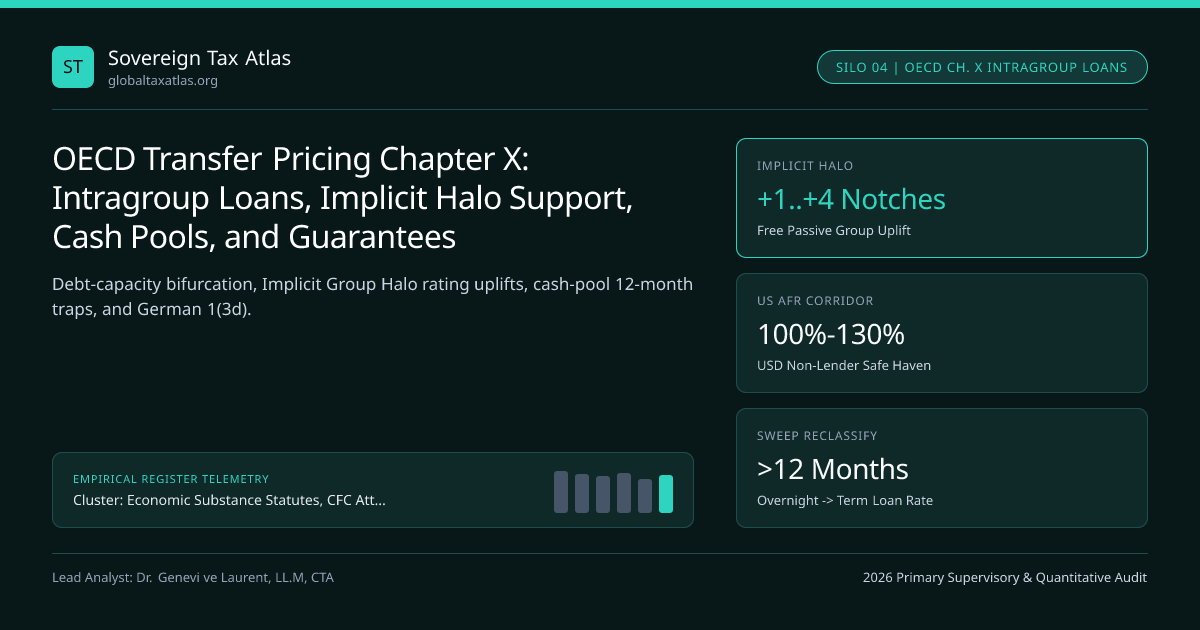
OECD Transfer Pricing Chapter X: Intragroup Loans, Implicit Halo Support, Cash Pools, and Guarantees
Added in 2020 and consolidated in Chapter X of the OECD Transfer Pricing Guidelines, financial-transaction transfer pricing polices debt-vs-equity delineation, subsidiary "implicit group halo" credit ratings, cash-pool synergies, and guarantees.
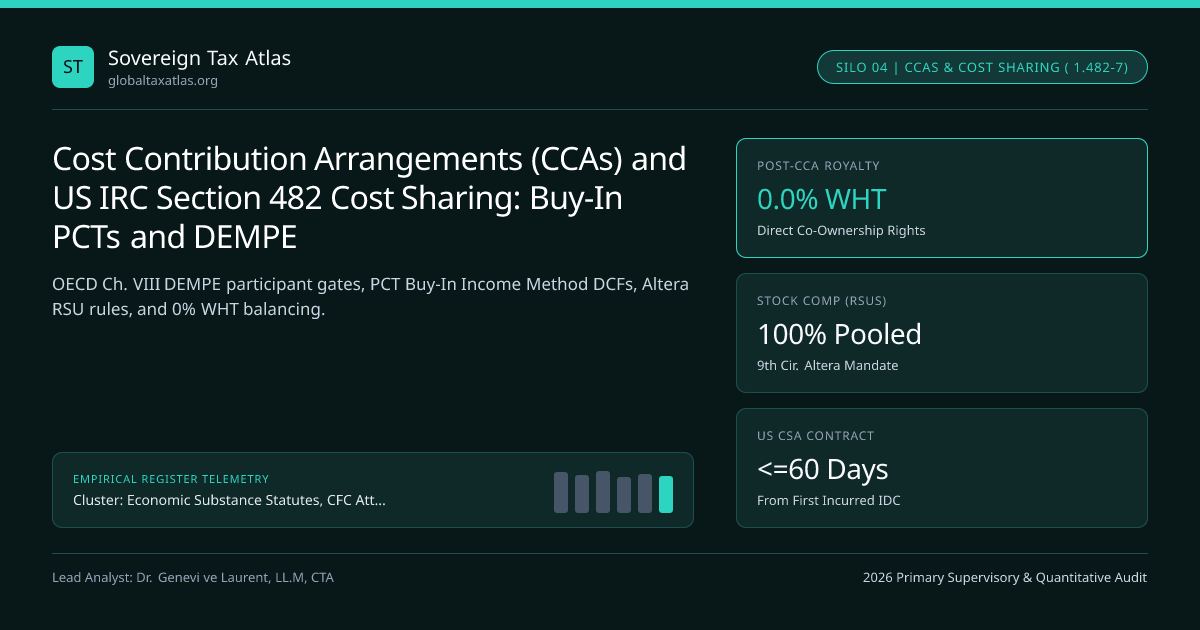
Cost Contribution Arrangements (CCAs) and US IRC Section 482 Cost Sharing: Buy-In PCTs and DEMPE
Tech and pharma giants co-develop global IP without ongoing cross-border royalties via OECD Chapter VIII Cost Contribution Arrangements (CCAs)—provided every participant employs DEMPE risk-controllers and prices Platform Contribution Buy-Ins at full fair value.
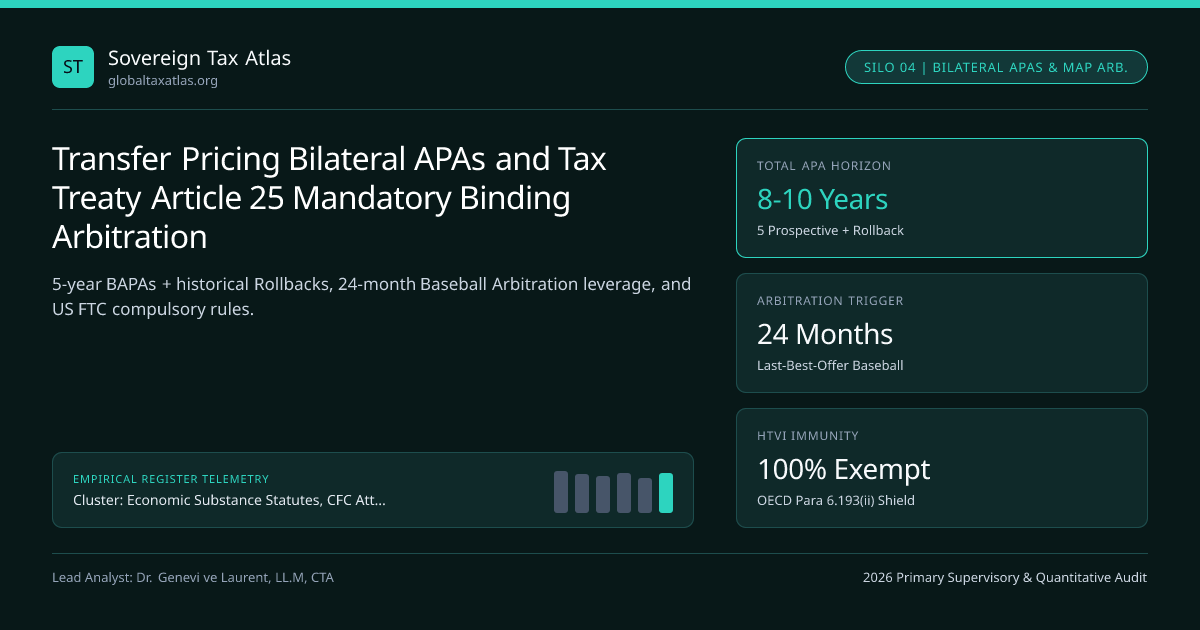
Transfer Pricing Bilateral APAs and Tax Treaty Article 25 Mandatory Binding Arbitration
When two tax authorities attack opposite sides of a USD 500M transfer pricing royalty or profit split, Bilateral Advance Pricing Agreements (BAPAs) and Tax Treaty Article 25(5) Mandatory Binding Final-Offer Arbitration provide an enforceable shield against 50%+ double taxation.
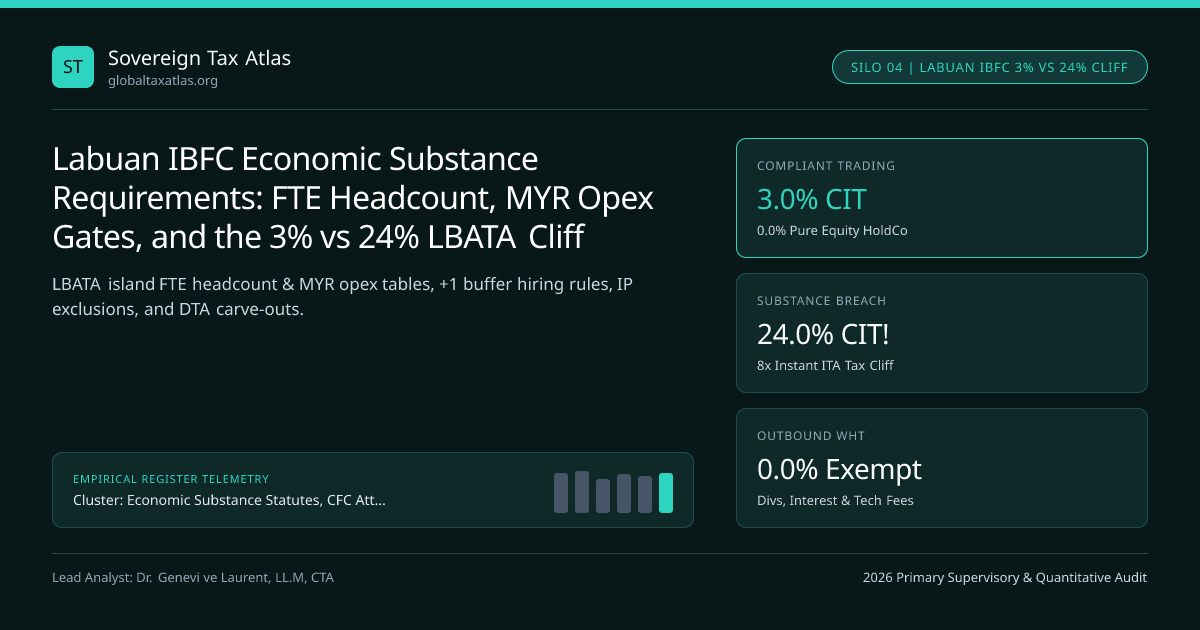
Labuan IBFC Economic Substance Requirements: FTE Headcount, MYR Opex Gates, and the 3% vs 24% LBATA Cliff
Supervised by Labuan FSA off Borneo, Malaysia Labuan IBFC offers a statutory 3% corporate tax on trading profits and 0% on pure equity holding—but missing a single Labuan Full-Time Employee or MYR opex ringgit spikes tax eightfold to 24.0%!
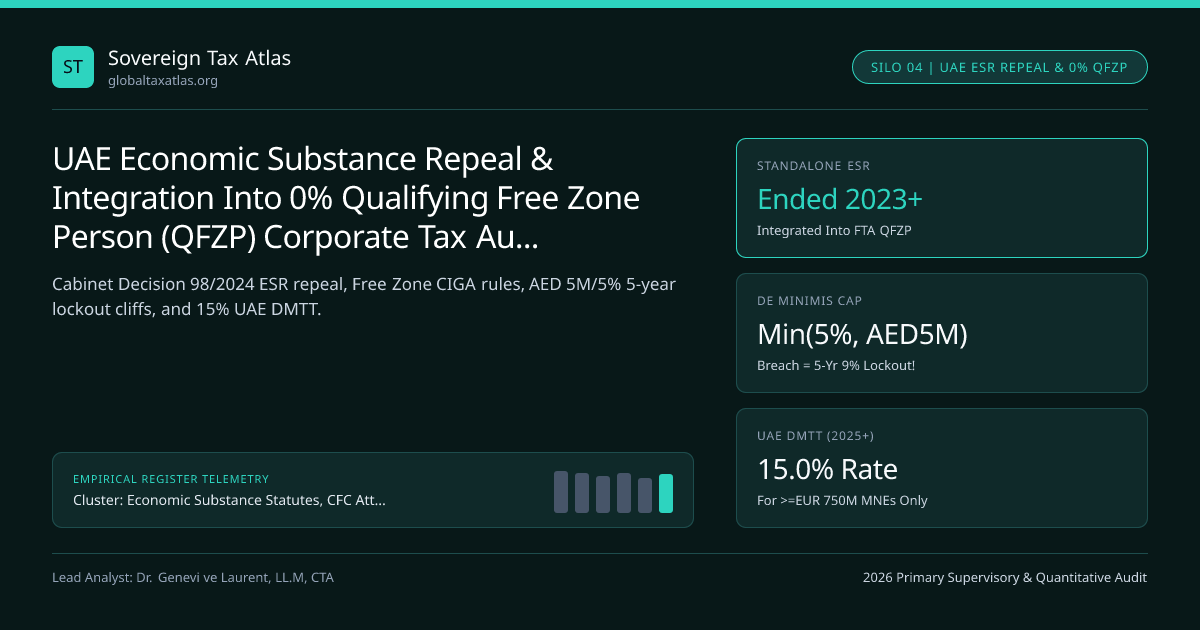
UAE Economic Substance Repeal & Integration Into 0% Qualifying Free Zone Person (QFZP) Corporate Tax Audits
By Cabinet Decision No. 98 of 2024, the UAE cancelled standalone Economic Substance Regulation (ESR) notifications for post-2022 years—embedding CIGA substance directly inside the 0% Qualifying Free Zone Person (QFZP) Corporate Tax gate!
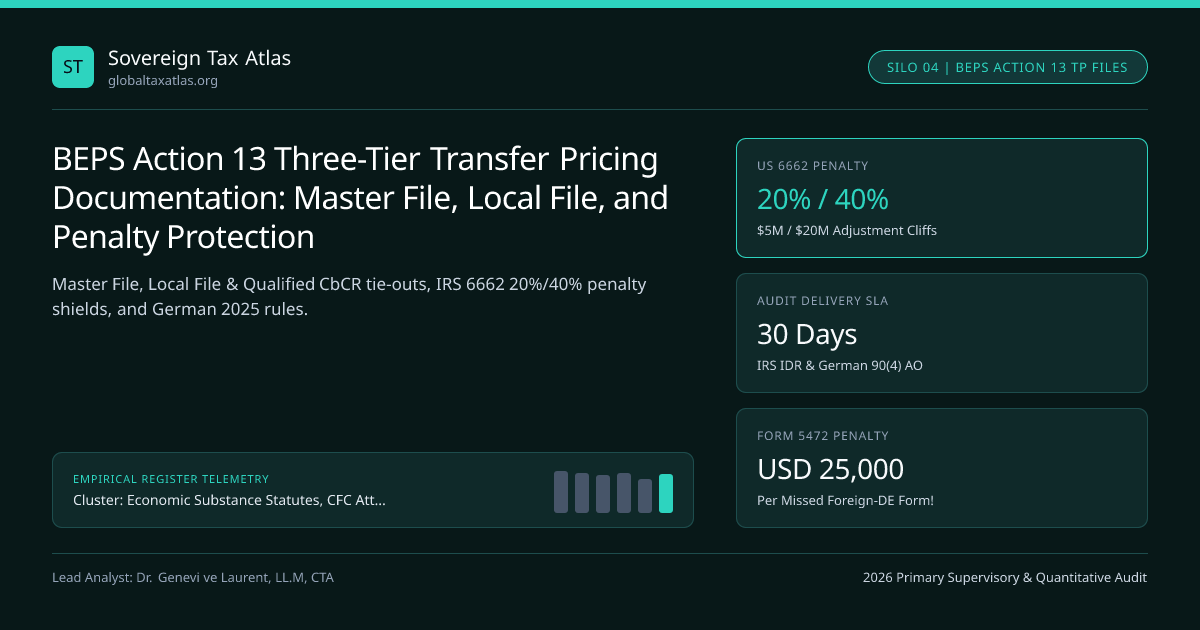
BEPS Action 13 Three-Tier Transfer Pricing Documentation: Master File, Local File, and Penalty Protection
Enacted across more than 100 jurisdictions, OECD BEPS Action 13 replaces ad-hoc transfer-pricing memos with a synchronized Three-Tier Documentation standard (Master File, Local File, and Country-by-Country Report)—serving as the sole statutory shield against 20%–40% penalties.
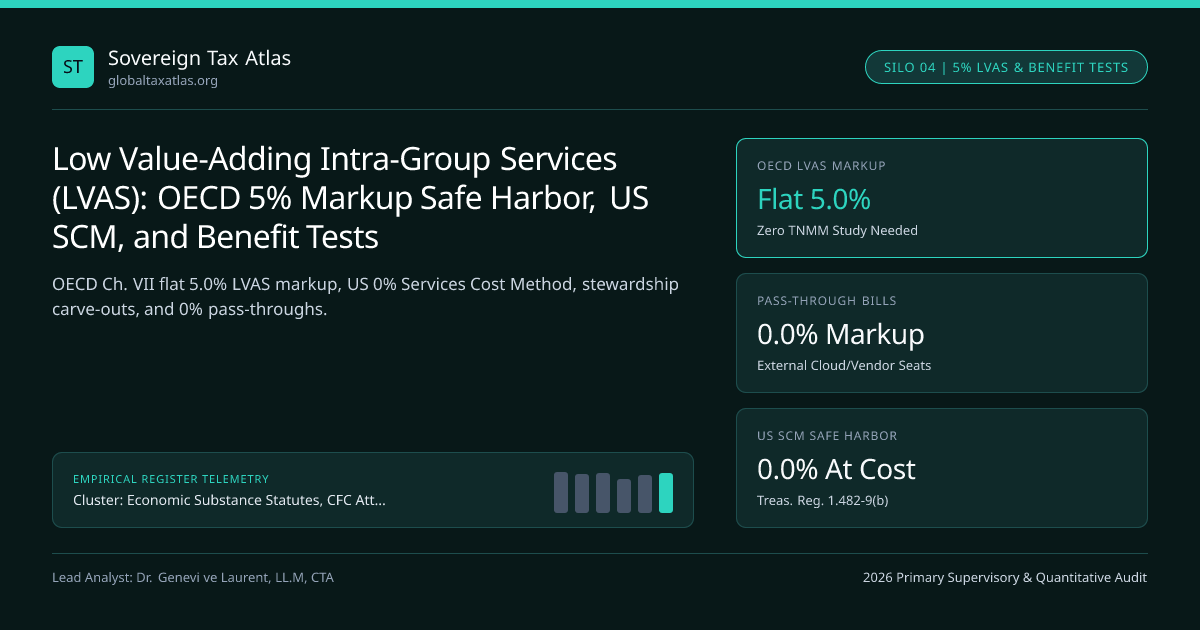
Low Value-Adding Intra-Group Services (LVAS): OECD 5% Markup Safe Harbor, US SCM, and Benefit Tests
Disallowed headquarters "management fees" rank #1 by audit frequency across emerging and European tax offices; applying the OECD Chapter VII 5.0% Low Value-Adding Intra-Group Services (LVAS) simplified approach and stripping Shareholder Activities secures clean deductions.
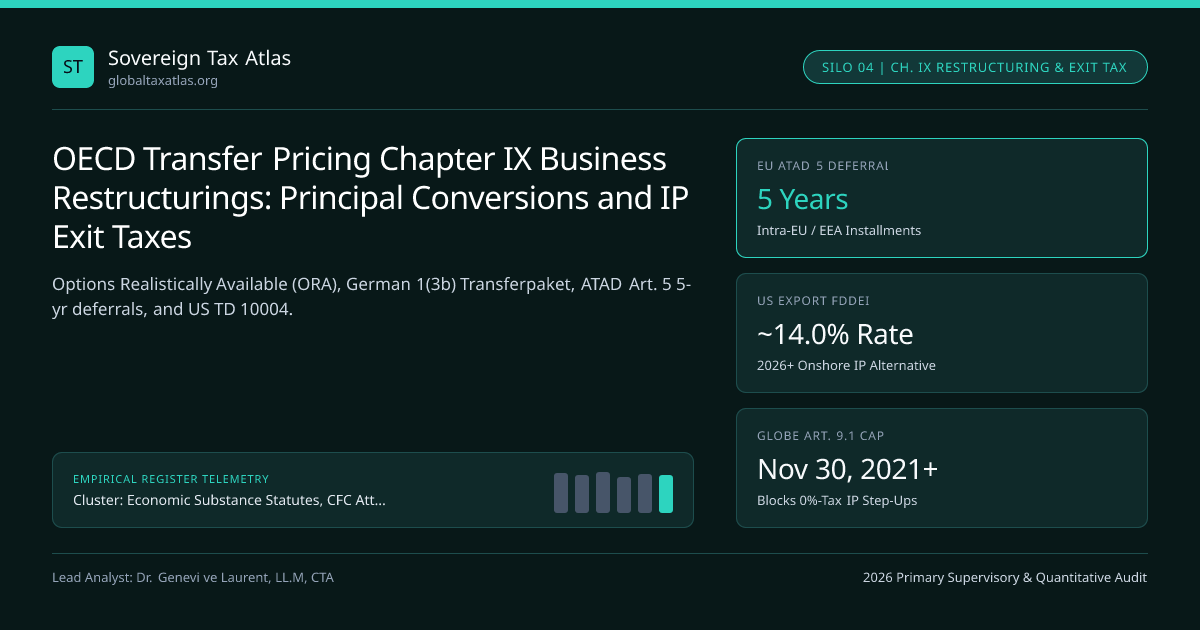
OECD Transfer Pricing Chapter IX Business Restructurings: Principal Conversions and IP Exit Taxes
Converting full-fledged operating subsidiaries into limited-risk distributors or migrating offshore IP onshore triggers OECD Chapter IX exit-compensation audits, EU ATAD Article 5 exit taxes, and German §1(3b) Funktionsverlagerung.