
Editorial Research Index
Institutional briefings & primary regulatory analysis
Financial analysis and briefings published by Sovereign Tax Atlas.
20 matching briefings
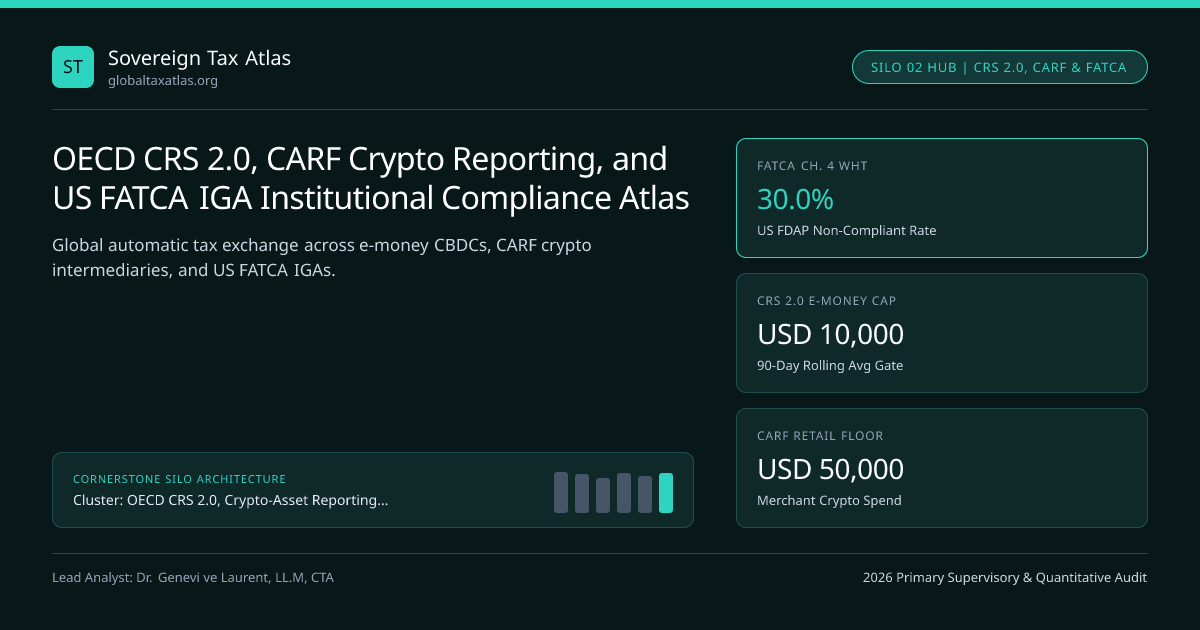
OECD CRS 2.0, CARF Crypto Reporting, and US FATCA IGA Institutional Compliance Atlas
Beginning January 1, 2026 across 60+ early-adopter jurisdictions, OECD CRS 2.0 and the Crypto-Asset Reporting Framework (CARF) converge with US FATCA Model 1 and Model 2 IGAs to govern cross-border financial and digital-asset tax transparency.
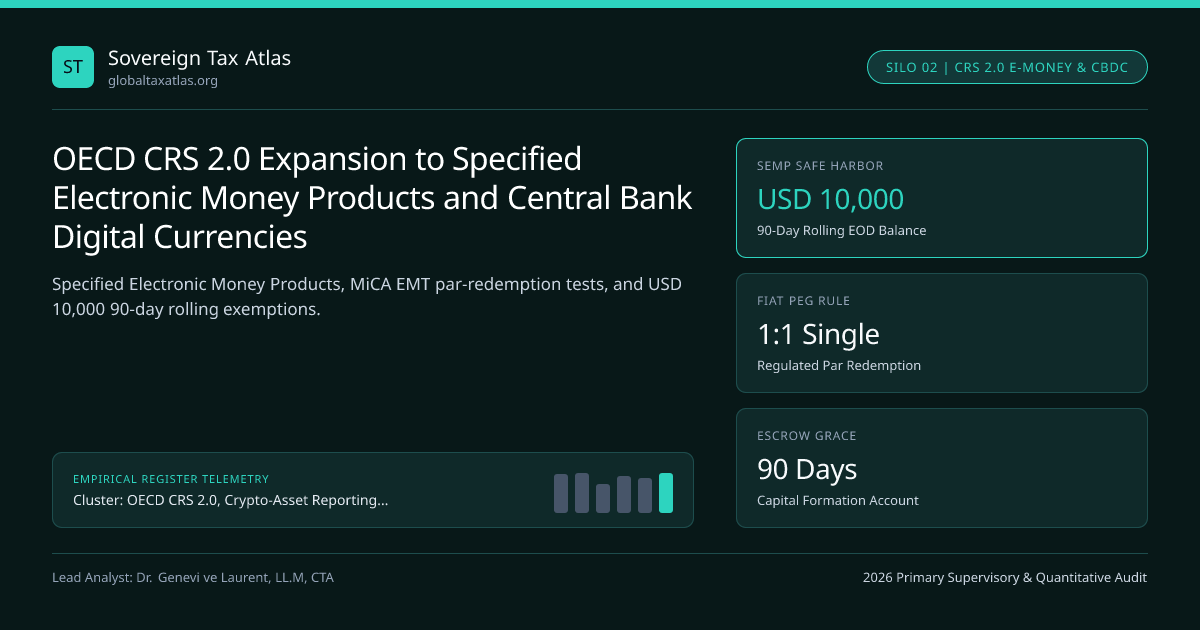
OECD CRS 2.0 Expansion to Specified Electronic Money Products and Central Bank Digital Currencies
Amended Section VIII of OECD CRS 2.0 reclassifies digital wallets, fiat-backed stablecoin issuers, and Central Bank Digital Currency intermediaries as Depository Institutions subject to a USD 10,000 rolling de minimis gate.
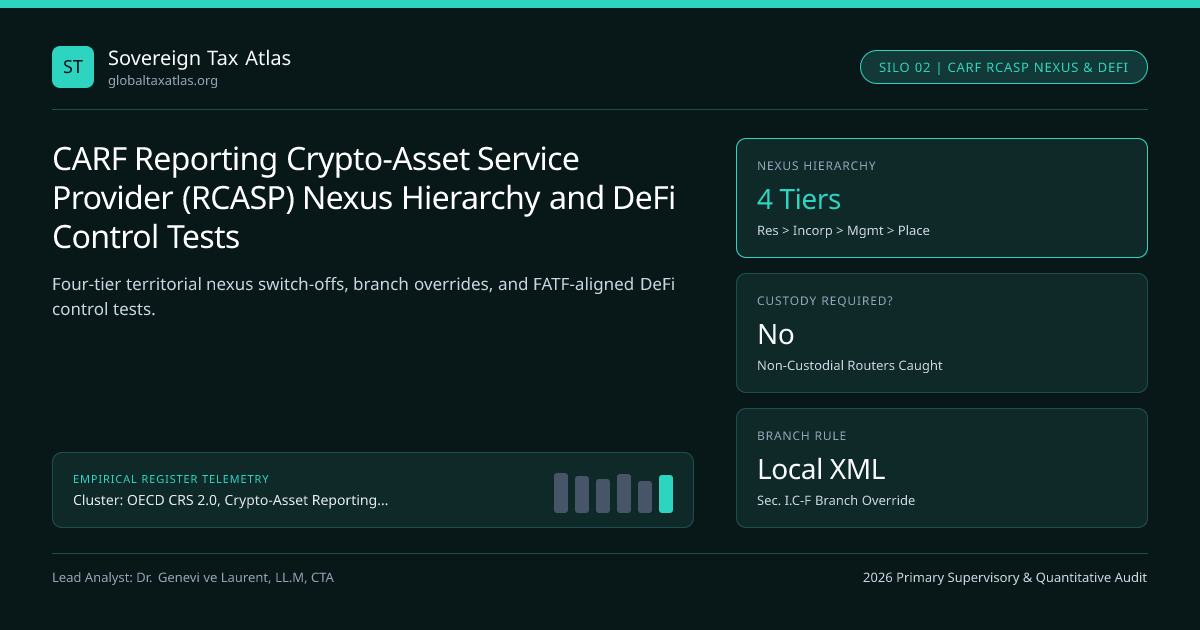
CARF Reporting Crypto-Asset Service Provider (RCASP) Nexus Hierarchy and DeFi Control Tests
OECD CARF Section IV establishes a four-tier territorial nexus hierarchy for Reporting Crypto-Asset Service Providers while testing DeFi governance protocols against FATF control and sufficient influence standards.
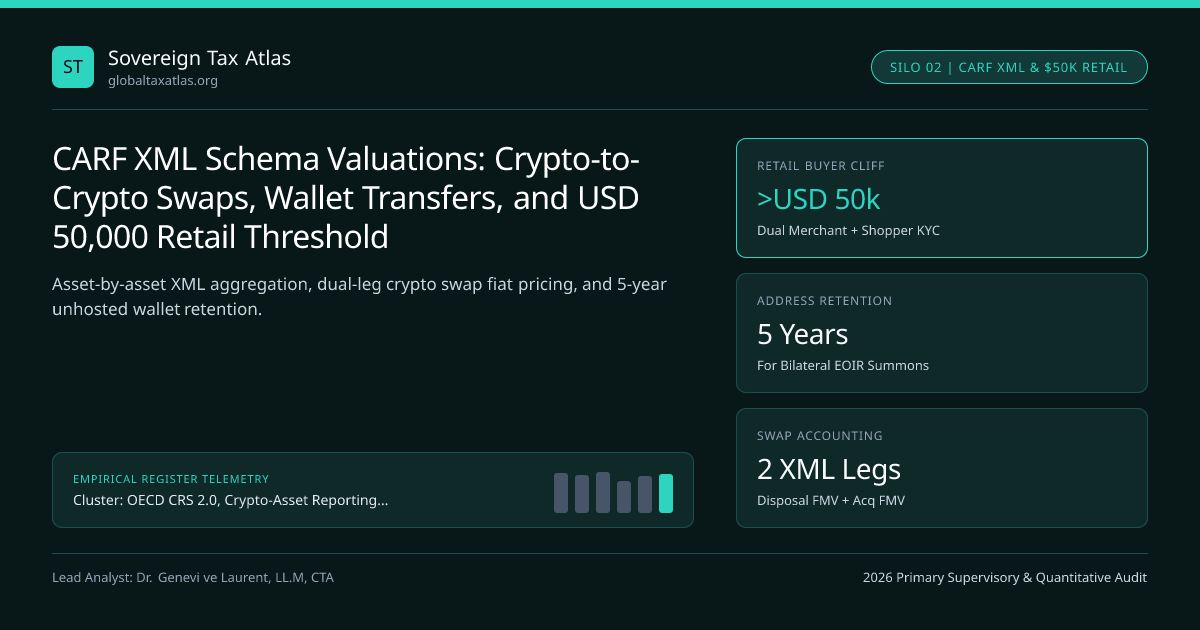
CARF XML Schema Valuations: Crypto-to-Crypto Swaps, Wallet Transfers, and USD 50,000 Retail Threshold
OECD CARF Section II mandates annual asset-by-asset XML reporting across crypto-fiat trades, crypto-to-crypto swaps, external unhosted wallet transfers, and retail crypto payments exceeding USD 50,000.
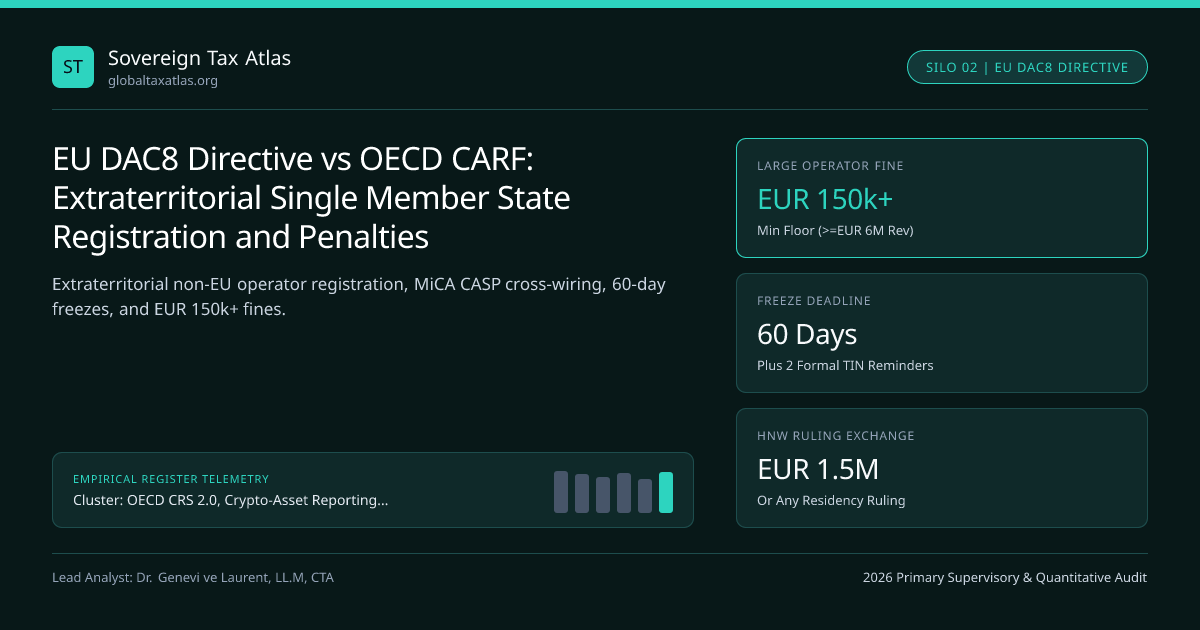
EU DAC8 Directive vs OECD CARF: Extraterritorial Single Member State Registration and Penalties
Applicable from January 1, 2026, EU Directive 2023/2226 (DAC8) goes beyond OECD CARF by forcing non-EU offshore exchanges serving European residents to register in a single EU Member State or face deregistration and domain blocks.
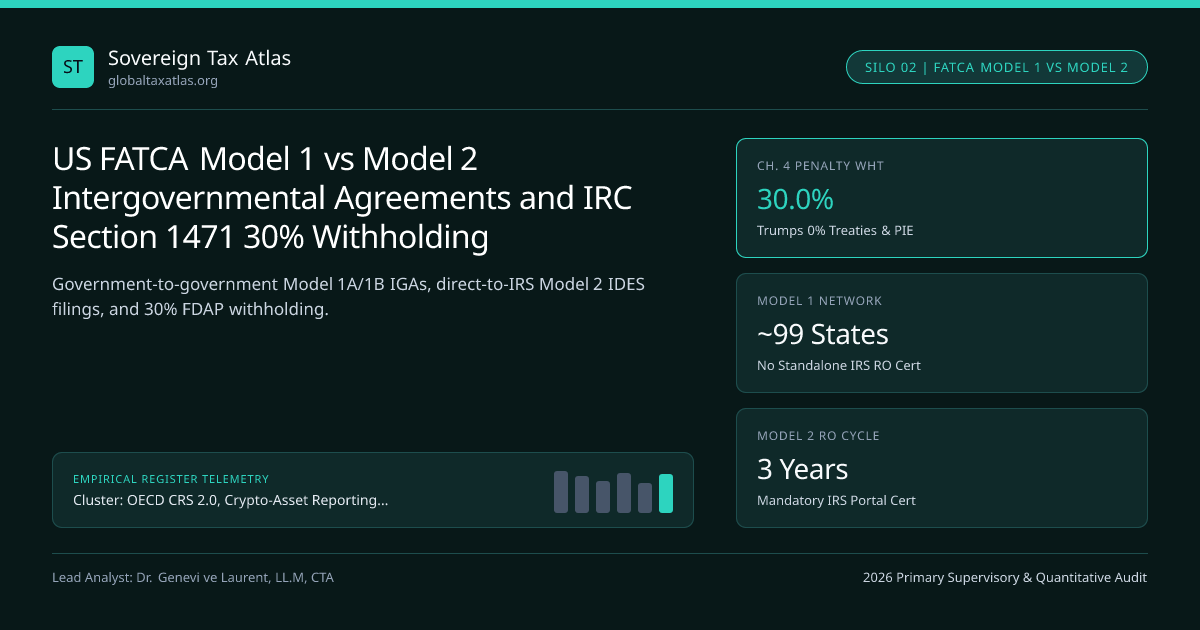
US FATCA Model 1 vs Model 2 Intergovernmental Agreements and IRC Section 1471 30% Withholding
Over 113 jurisdictions implement US FATCA through either Model 1 government-to-government or Model 2 direct-to-IRS Intergovernmental Agreements—shielding compliant FFIs from 30.0% IRC Section 1471 punitive withholding.
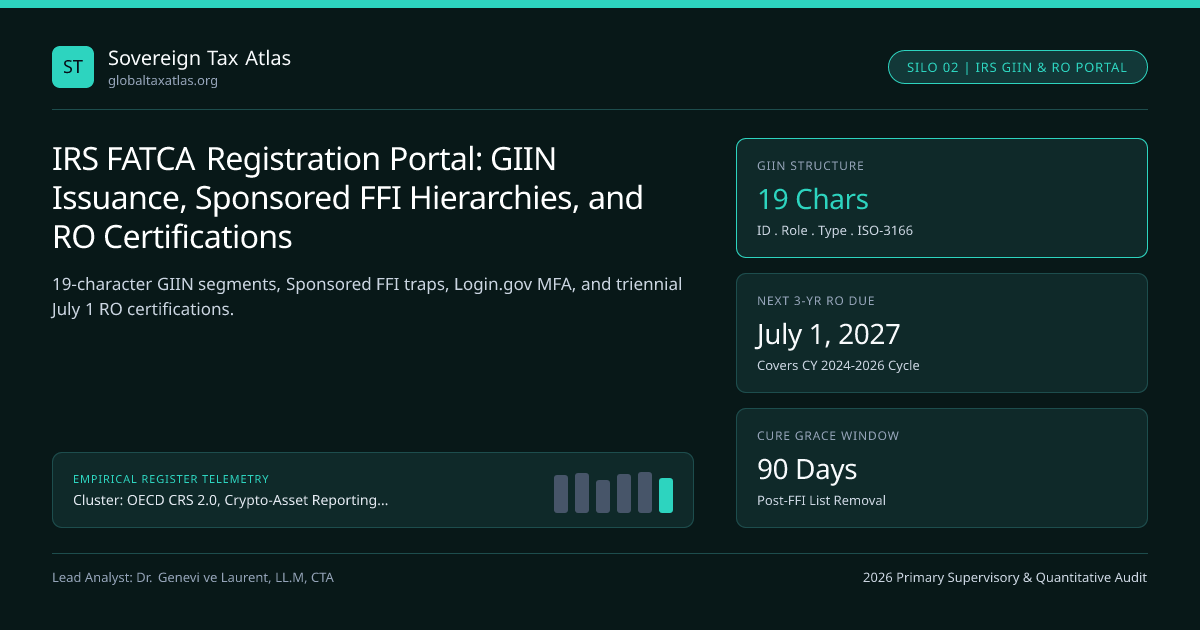
IRS FATCA Registration Portal: GIIN Issuance, Sponsored FFI Hierarchies, and RO Certifications
Maintaining an active 19-character Global Intermediary Identification Number (GIIN) on the monthly IRS FFI List requires navigating Sponsored FFI hierarchies, login.gov MFA rules, and triennial July 1 Responsible Officer certifications.
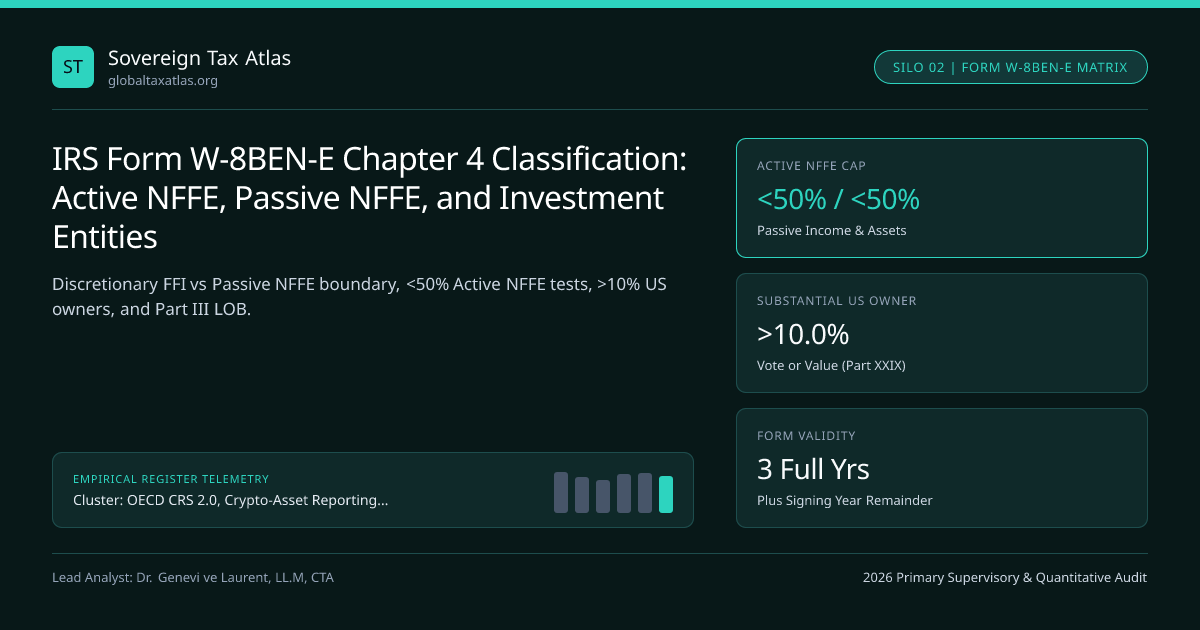
IRS Form W-8BEN-E Chapter 4 Classification: Active NFFE, Passive NFFE, and Investment Entities
Completing Line 5 Chapter 4 status on IRS Form W-8BEN-E requires separating Active NFFEs, Passive NFFEs, and Managed Investment Entity FFIs—where misclassifying a managed SPV triggers 30% withholding.
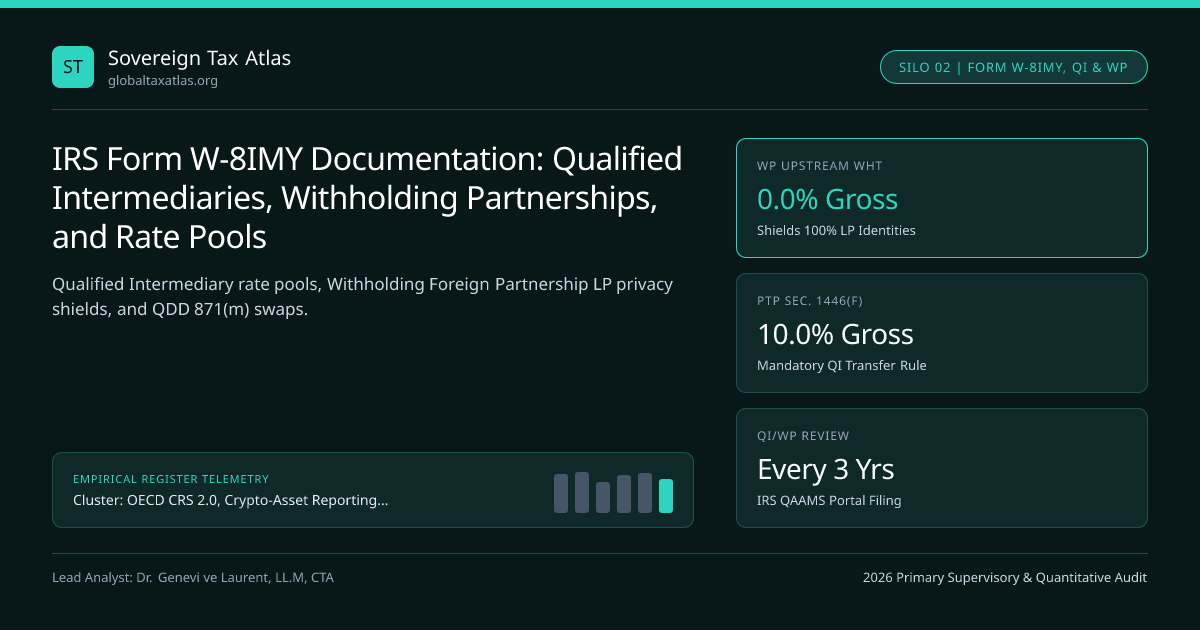
IRS Form W-8IMY Documentation: Qualified Intermediaries, Withholding Partnerships, and Rate Pools
Foreign custodians, Cayman master-feeder partnerships, and Luxembourg SCSps execute IRS Form W-8IMY to transmit underlying investor W-8/W-9 certificates—or preserve LP confidentiality via Withholding Foreign Partnership agreements.
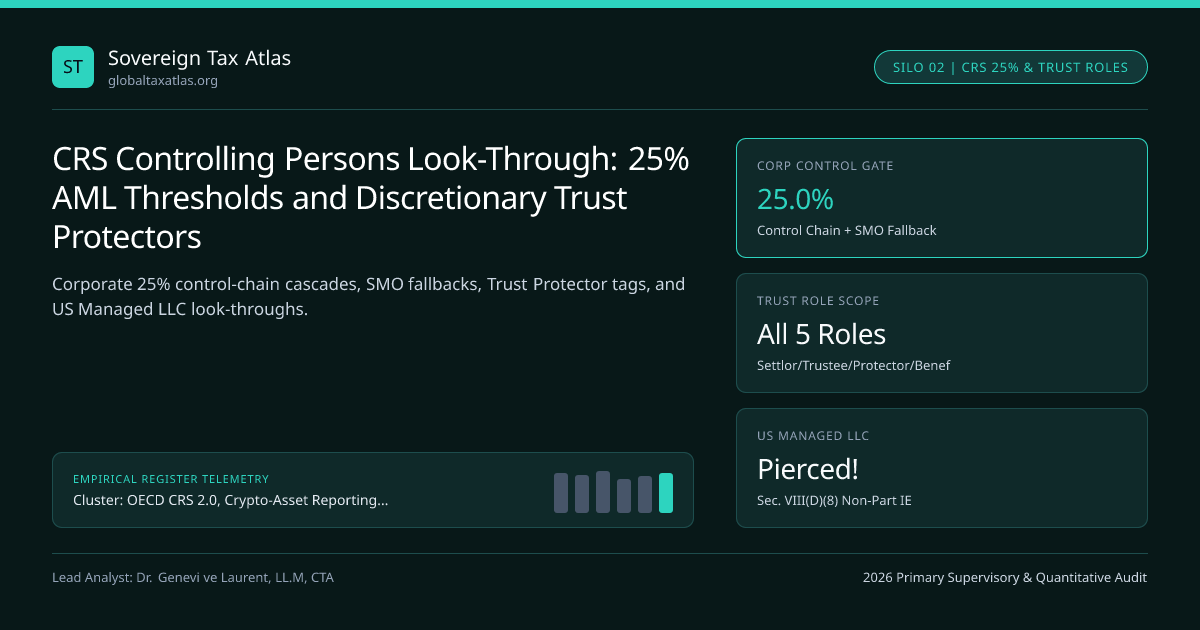
CRS Controlling Persons Look-Through: 25% AML Thresholds and Discretionary Trust Protectors
OECD CRS Section VIII(D)(6) and CRS 2.0 role-tagging mandates require looking through Passive NFEs via a 25% ownership cascade while reporting Settlors, Trustees, Protectors, and Discretionary Beneficiaries of trusts.
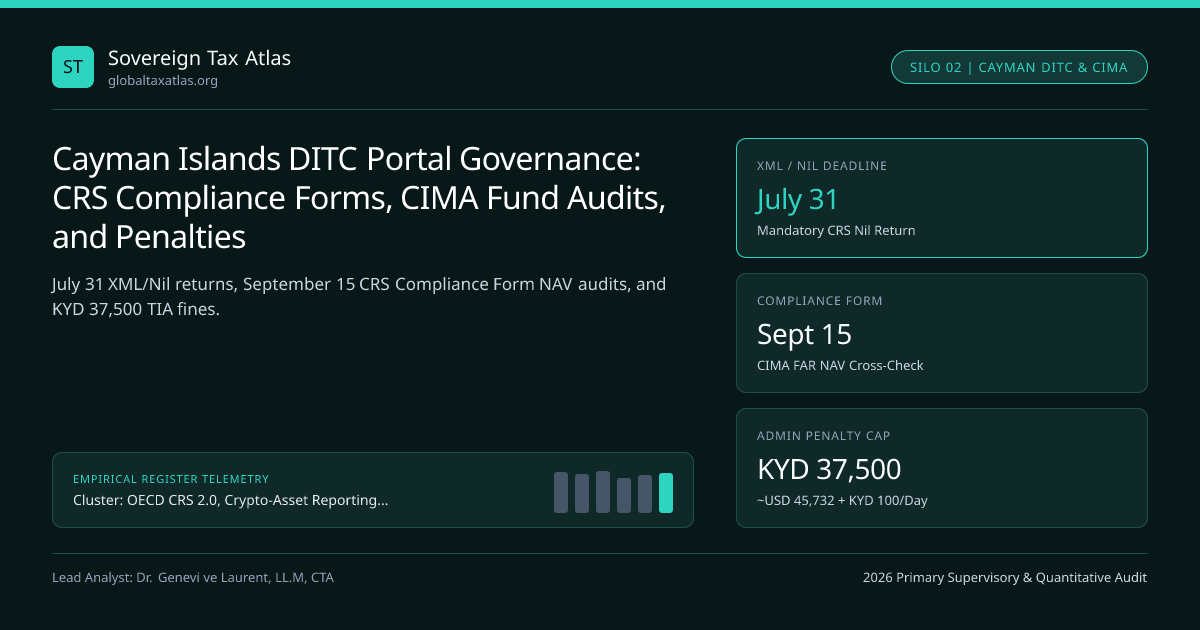
Cayman Islands DITC Portal Governance: CRS Compliance Forms, CIMA Fund Audits, and Penalties
Cayman Islands Reporting Financial Institutions supervised by CIMA and the Tax Information Authority face dual annual DITC Portal mandates: July 31 XML exchanges and the September 15 CRS Compliance Form.
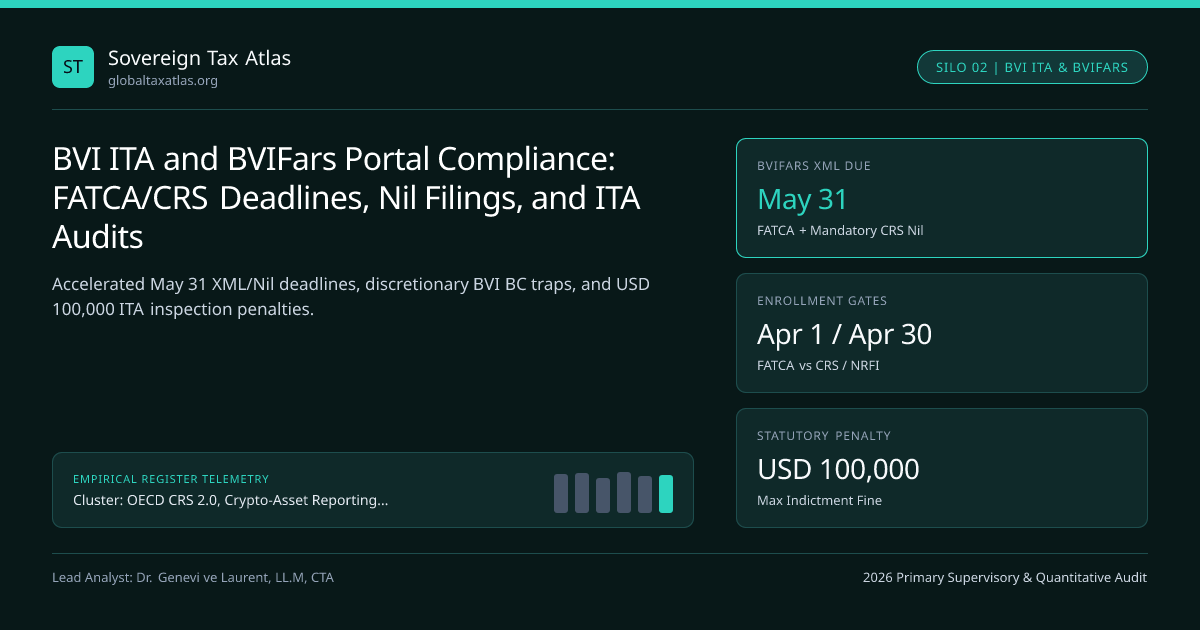
BVI ITA and BVIFars Portal Compliance: FATCA/CRS Deadlines, Nil Filings, and ITA Audits
British Virgin Islands Business Companies and Approved Funds supervised by the BVI FSC and International Tax Authority face strict May 31 BVIFars Portal XML deadlines, mandatory CRS Nil filings, and written policy inspections.
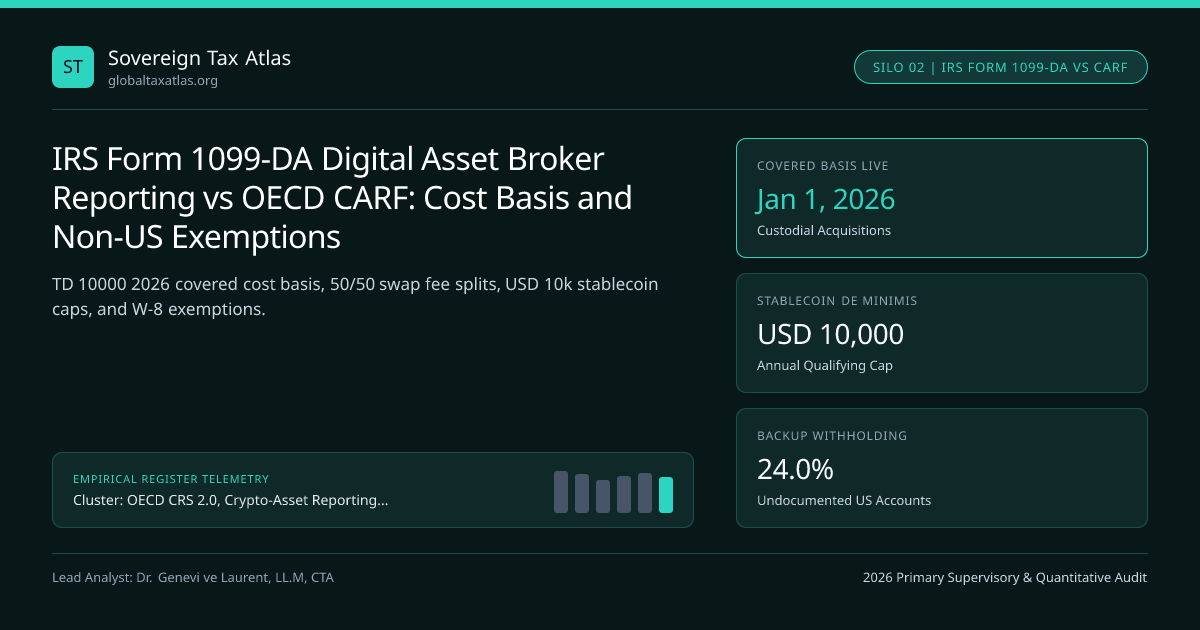
IRS Form 1099-DA Digital Asset Broker Reporting vs OECD CARF: Cost Basis and Non-US Exemptions
Final US Treasury Section 6045 digital asset broker regulations phase in Form 1099-DA gross proceeds and 2026 cost-basis reporting alongside non-US Form W-8 exemptions and future US CARF alignment.
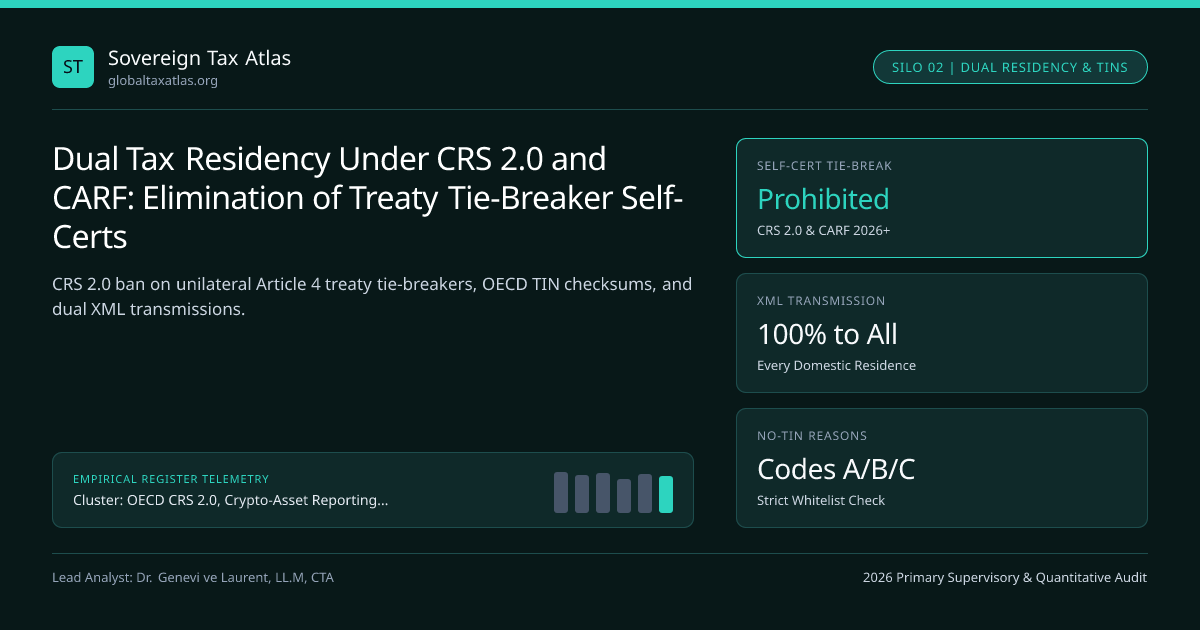
Dual Tax Residency Under CRS 2.0 and CARF: Elimination of Treaty Tie-Breaker Self-Certs
OECD CRS 2.0 and CARF ban account holders from using bilateral tax treaty Article 4 tie-breaker rules on self-certifications to suppress dual tax residency—requiring reporting to ALL residence states.
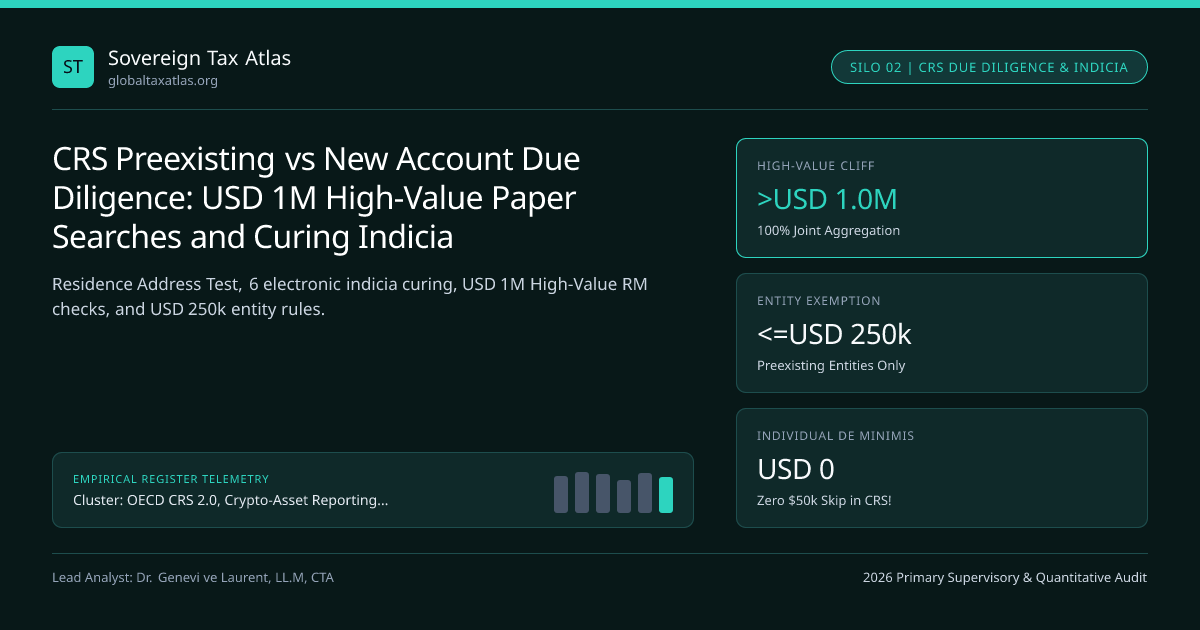
CRS Preexisting vs New Account Due Diligence: USD 1M High-Value Paper Searches and Curing Indicia
OECD CRS Sections III through VI establish distinct due-diligence tracks for Lower-Value, USD 1M+ High-Value, and USD 250k+ Entity Preexisting Accounts—including six statutory indicia and curing rules.
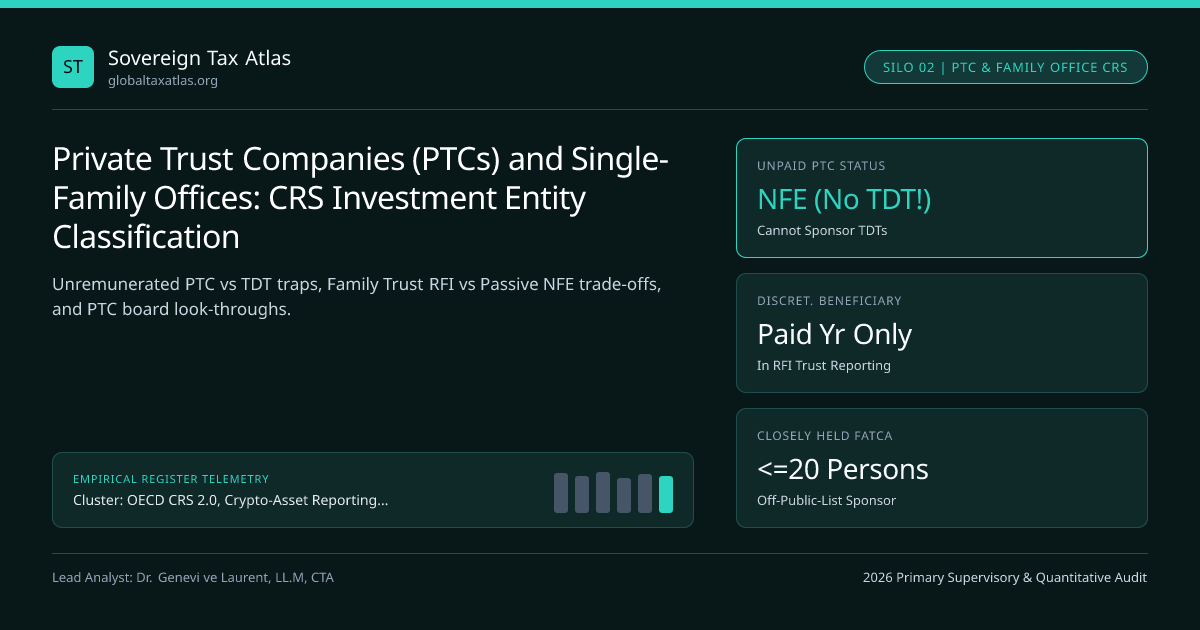
Private Trust Companies (PTCs) and Single-Family Offices: CRS Investment Entity Classification
Ultra-high-net-worth families using Cayman, BVI, Jersey, or Singapore Private Trust Companies (PTCs) and Single-Family Offices must test three CRS/FATCA Investment Entity prongs to prevent double reporting or hidden FI defaults.
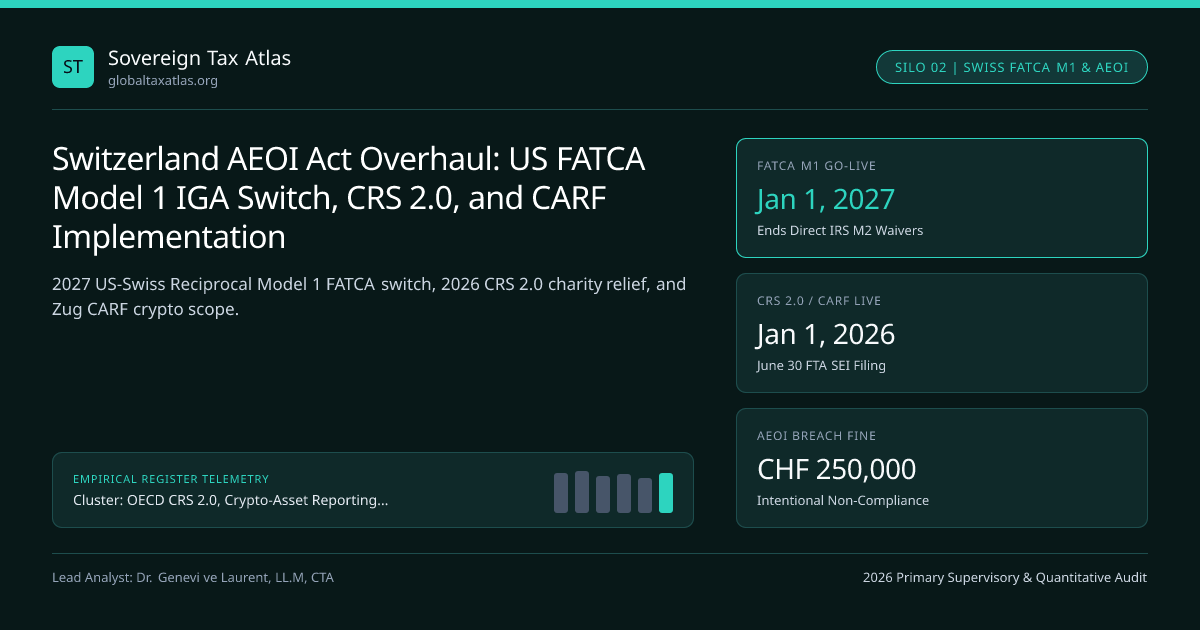
Switzerland AEOI Act Overhaul: US FATCA Model 1 IGA Switch, CRS 2.0, and CARF Implementation
Switzerland is executing a historic triple overhaul of its Federal AEOI and FATCA Acts—implementing CRS 2.0 and CARF from 2026 while switching from a unilateral Model 2 FATCA IGA to a reciprocal Model 1 IGA with the United States.
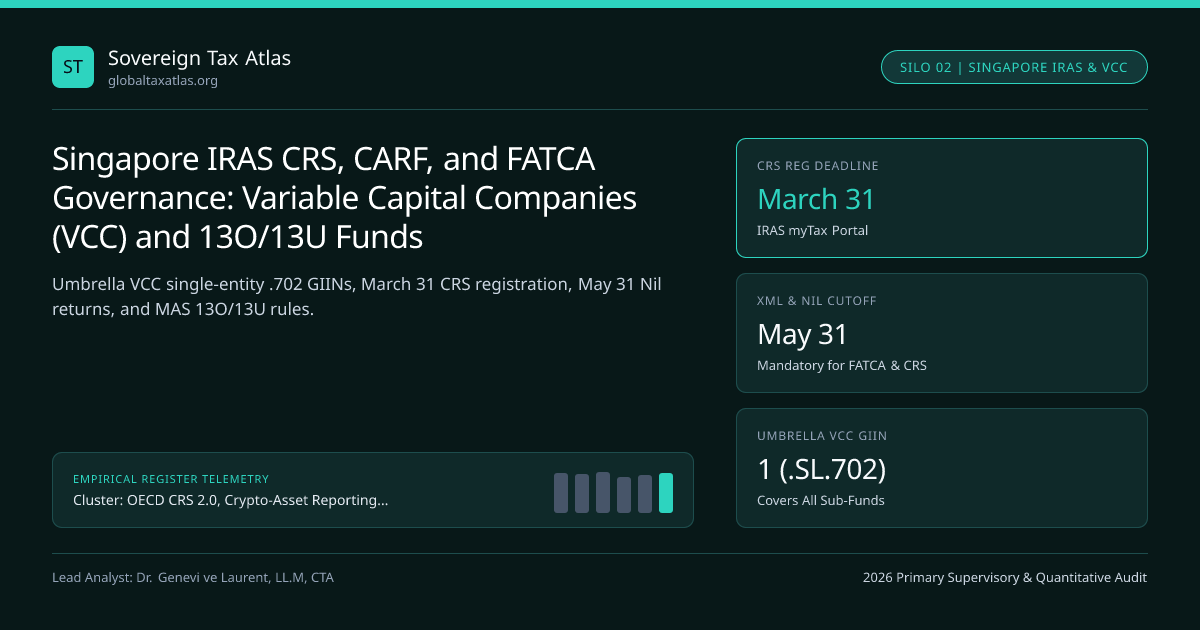
Singapore IRAS CRS, CARF, and FATCA Governance: Variable Capital Companies (VCC) and 13O/13U Funds
Singapore Variable Capital Companies (VCCs), MAS Section 13O/13U family offices, and DPT crypto licensees navigate unified May 31 IRAS myTax Portal FATCA/CRS XML filings and 2026 CARF onboarding.
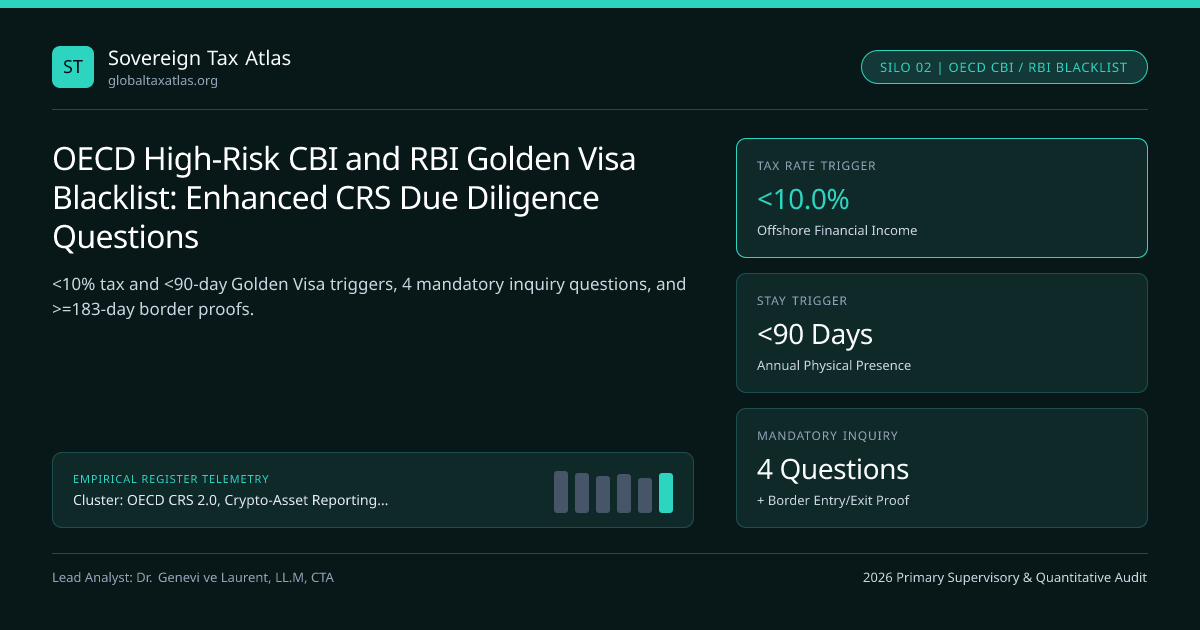
OECD High-Risk CBI and RBI Golden Visa Blacklist: Enhanced CRS Due Diligence Questions
When account holders present passports or tax certificates from jurisdictions on the OECD High-Risk CBI/RBI list (<10% foreign income tax and <90 days presence), banks must execute mandatory 4-question enhanced due diligence.
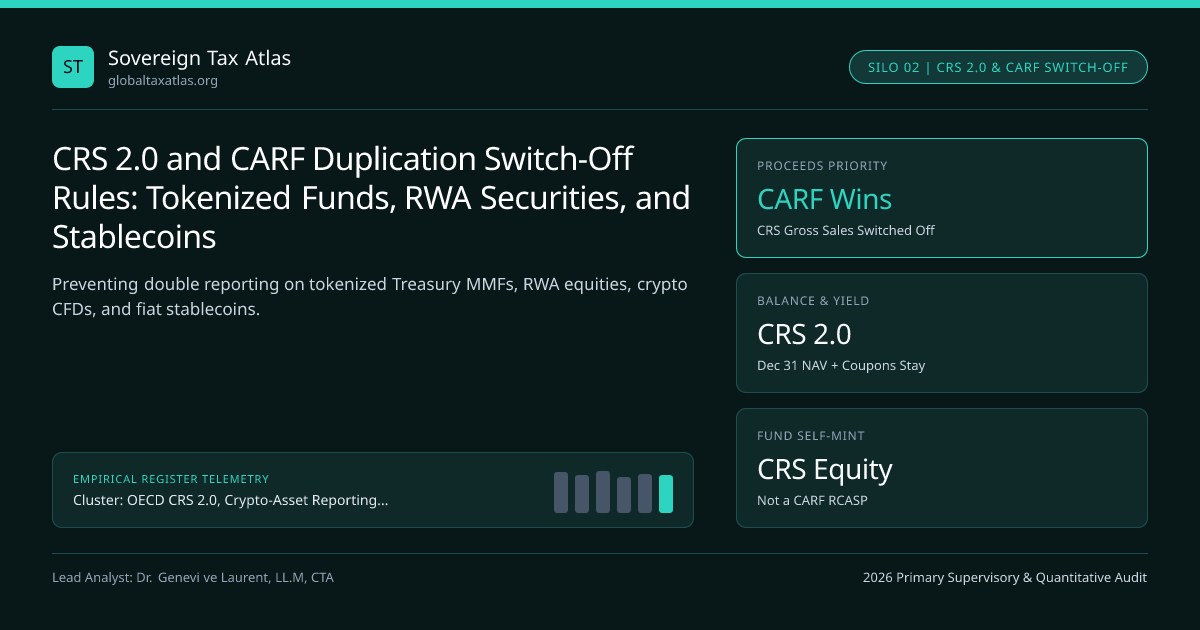
CRS 2.0 and CARF Duplication Switch-Off Rules: Tokenized Funds, RWA Securities, and Stablecoins
As BlackRock, Franklin Templeton, and global banks tokenize Treasury funds, bonds, and equities on public blockchains, OECD CRS 2.0 Section VIII(C)(17) switch-off rules prevent double reporting across CARF and CRS.